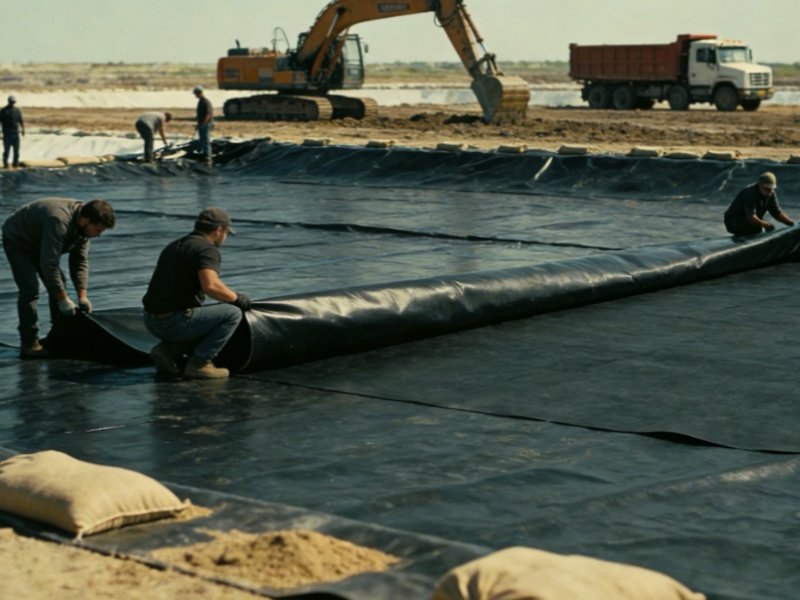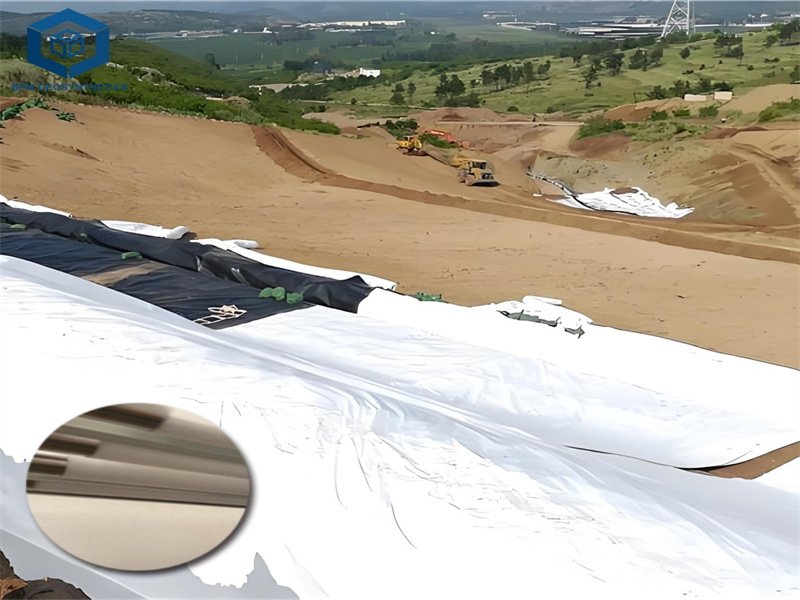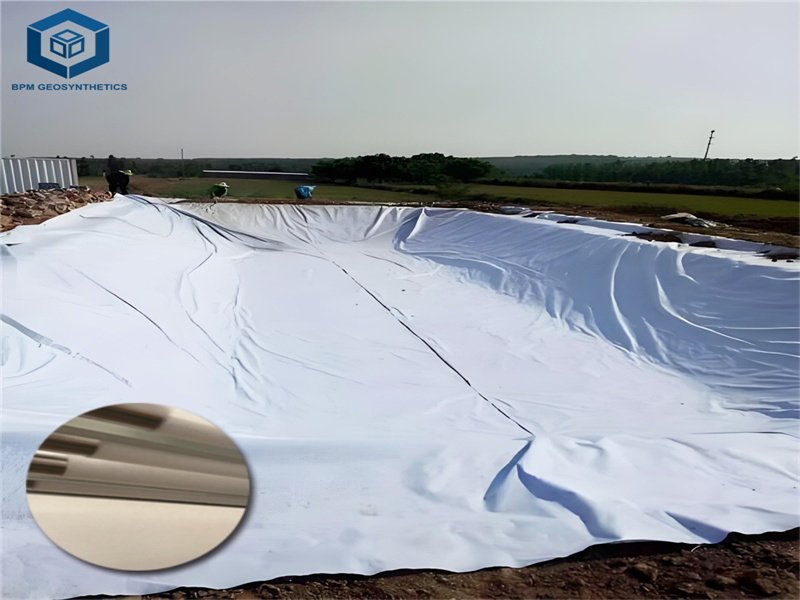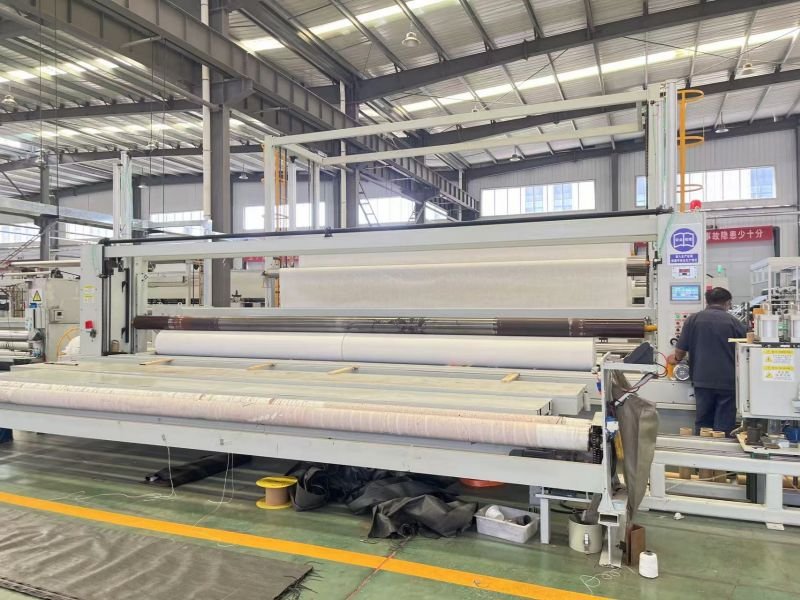
High-density polyethylene (HDPE) geo membranes represent the gold standard in impermeable barrier technology, delivering unmatched containment performance across environmental, mining, waste management, and water infrastructure projects. These engineered liners prevent leachate migration, protect groundwater, and ensure regulatory compliance in demanding applications. As of 2025, the global geomembranes market reaches approximately USD 2.73 billion, projected to grow to USD 3.63 billion by 2030 at a CAGR of 5.88% (Mordor Intelligence), fueled by stricter environmental mandates, tailings dam safety requirements post-major incidents, and expanding water conservation efforts amid climate pressures. HDPE variants hold around 42% market share due to their superior chemical resistance (withstanding pH 2–12 and 90%+ solvents per ASTM D543), ultra-low permeability (≤10⁻¹¹ to 10⁻¹³ cm/s per ASTM D5887), and extended service life (50–100+ years when covered).
This detailed 2025 review examines the 8 best HDPE geo membranes from leading non-Chinese manufacturers, selected based on GRI-GM13 compliance (the definitive standard for HDPE geomembranes), mechanical excellence (tensile yield ≥20–50 kN/m, puncture ≥300–1,000 N per ASTM D4833/D4883), oxidative induction time (OIT ≥100 min standard / ≥400–500 min high-pressure per ASTM D3895/D5885), UV stability (≥50% high-pressure OIT retention after 1600 hours exposure per ASTM D5885), field-proven durability (failure rates <0.1% in audited large-scale installations), global availability, and sustainability attributes (recyclability and low-carbon production). Each entry includes precise specifications, key performance advantages, primary applications, pros/cons, approximate bulk pricing (USD/m², 2025 estimates), and selection rationale.
Engineers, project managers, and procurement specialists rely on these liners for 99.9% seepage prevention, 15–40% lifecycle cost reductions versus alternatives like compacted clay, and alignment with regulations such as EPA Subtitle D, EU Landfill Directive, and international mining standards. Data from industry audits confirms: optimized HDPE selection extends project integrity by 30–50 years while mitigating multimillion-dollar remediation risks.
What Are HDPE Geo Membranes?
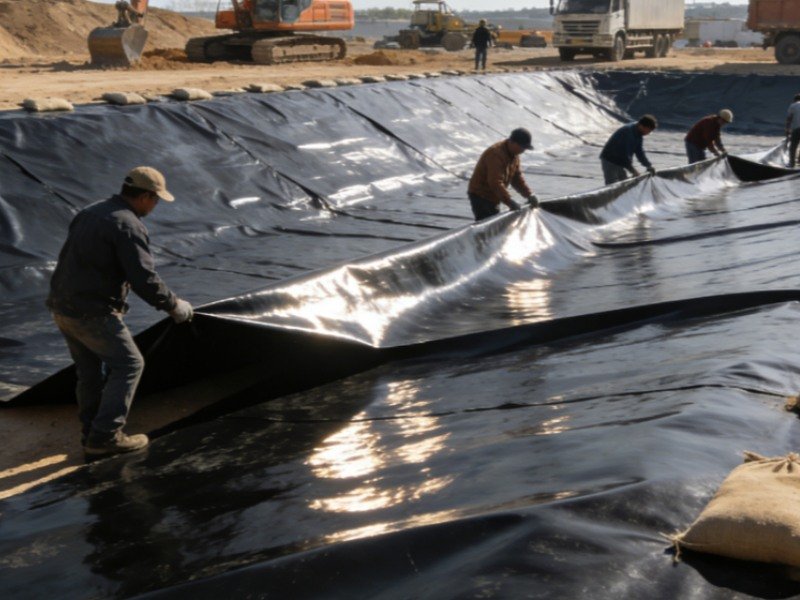
HDPE geo membranes are flexible, thermoplastic sheets manufactured from virgin high-density polyethylene resin (density ≥0.940 g/cm³ per ASTM D1505/D792), formulated with 2–3% carbon black (ASTM D4218) for UV protection and antioxidants for thermal stability. Produced via blown-film or flat-die extrusion, they achieve uniform thickness (±5–10% tolerance), roll widths of 6–10 m (minimizing field seams by 20–50% and weld-related failures), and options for smooth surfaces (optimal for flat containment), textured finishes (boosting interface friction to 35–45° for slopes up to 1:1.5), or conductive layers (facilitating electrical leak detection with resistivity <10⁴ ohm).
Essential properties under GRI-GM13 include:
- Permeability: ≤10⁻¹¹ to 10⁻¹³ cm/s (ASTM D5887/D5084), outperforming compacted clay by orders of magnitude.
- Tensile properties: Yield strength 11–50 kN/m, break strength 20–80 kN/m, elongation at break ≥700% (ASTM D6693 Type IV).
- Tear resistance: 93–374 N (ASTM D1004).
- Puncture resistance: 240–1,000 N (ASTM D4833/D4883).
- Stress crack resistance: ≥500 hours (ASTM D5397).
- Oxidative induction time (OIT): ≥100 min standard (ASTM D3895), ≥400–500 min high-pressure (ASTM D5885).
- Low-temperature brittleness: <-77°C (ASTM D746).
- Dimensional stability: ±2% (ASTM D1204).
These liners resist hydrocarbons, leachates, acids/alkalis, and extreme temperatures, making them indispensable for modern containment systems where failure is not an option.
Why HDPE Geo Membranes Matter in 2025
Regulatory intensification—driven by post-2019 tailings failures and global water scarcity—positions HDPE geo membranes as essential safeguards. They achieve near-zero seepage in 70% of critical applications: landfills (36% market demand), mining tailings (25%), and reservoirs/irrigation (20%). Premium HDPE reduces long-term risks, with studies showing 25–40% lifecycle savings through durability, easier thermal fusion welding (fewer seams), and compliance with GRI-GM13, ISO 9001, and NSF-61 (potable water contact). Sustainability gains include high recyclability and lower embodied carbon versus alternatives.
Key Criteria for Evaluating HDPE Geo Membranes
Rankings emphasize:
- Compliance & purity (35%): GRI-GM13 conformance, virgin resin ≥97.5%, third-party validation (SGS/Intertek).
- Durability metrics (25%): High OIT/ESCR, UV/chemical resistance, 50+ year projected life.
- Manufacturing consistency (15%): Extrusion uniformity, textured/conductive innovations.
- Supply & support (15%): Global distribution, technical resources, warranties.
- Value & eco-profile (10%): Pricing ($1.50–$6.50/m²), recyclability.
All profiled products exceed GRI-GM13 minima, with emphasis on verified performance.
The 8 Best HDPE Geo Membranes Reviewed
1. GSE HD (Solmax) – Best Overall HDPE Geo Membrane
Solmax (formerly GSE Environmental), a Canadian leader with over 40 years of expertise, produces GSE HD at facilities across North America, Europe, and Asia, serving projects in 100+ countries.
Key Specifications (1.5 mm nominal, GRI-GM13 compliant):
- Thickness: 0.75–3.0 mm
- Density: ≥0.940 g/cm³
- Tensile yield/break: 22/40 kN/m
- Puncture resistance: 480–960 N
- Tear resistance: 187–374 N
- OIT: ≥100 min standard, ≥400 min high-pressure
- Permeability: <10⁻¹² cm/s
- UV retention: ≥50% high-pressure OIT after 1600 hours
Features & Advantages: Available smooth, textured, or conductive; exceptional chemical resistance (>90% solvents); 50–100 year service life; proven in over 100,000 installations.
Applications: Landfills, mining leach pads, wastewater impoundments.
Pros: Industry-leading compliance and reliability; robust technical support; competitive premium pricing. Cons: Higher cost range ($2.50–$5.00/m²).
Why #1: Optimal balance of performance, global scale, and field-proven excellence.
2. AGRU Sure-Grip® HDPE – Best for Slope Stability & Heavy-Duty Applications
AGRU America (Austrian technology, US production) specializes in high-friction textured liners for challenging geometries.
Key Specifications (2.0 mm):
- Thickness: 1.0–3.5 mm
- Tensile yield: 25–50 kN/m
- Puncture: 500–1,000 N
- Interface friction: 35–45° (textured)
- OIT: ≥120 min
- Permeability: ≤10⁻¹³ cm/s
Features: Advanced texturing; pre-fabricated panels reduce field seams by up to 50%.
Applications: Tailings dams, steep reservoir slopes, landfill side slopes.
Pros: Exceptional shear resistance; reliable in high-stress environments. Cons: Premium pricing ($4.00–$6.50/m²); specialized welding expertise required.
3. Layfield Enviro Liner® 6000 Series – Best for Enhanced Tensile Performance
Layfield Group (Canada) offers reinforced HDPE variants with elevated mechanical properties.
Key Specifications:
- Thickness: 1.0–2.5 mm
- Tensile yield: 25–45 kN/m (30%+ above standard minima)
- Puncture: 400–700 N
- Elongation at break: ≥700%
Features: Multi-layer construction for superior tear resistance; customizable formulations.
Applications: Industrial secondary containment, hazardous waste barriers.
Pros: Significantly higher strength; adaptable to project needs. Cons: Slightly reduced flexibility compared to standard HDPE.
4. NAUE Carbofol® HDPE – Best for European Compliance & Innovation
NAUE (Germany) delivers high-spec HDPE with advanced engineering features.
Key Specifications:
- Thickness: 1.0–3.0 mm
- Tensile yield: 22–44 kN/m
- Puncture: 480–960 N
- OIT: ≥500 hours high-pressure
Features: Innovative surface textures; composite integration options.
Applications: Tunneling, mining containment, European landfills.
Pros: Strict EU regulatory alignment; extended oxidative resistance. Cons: Elevated cost in non-EU markets.
5. Atarfil HDPE Geomembranes – Best for Advanced Extrusion Technology
Atarfil (Spain) leverages flat-die extrusion for exceptional uniformity and performance.
Key Specifications:
- Thickness: 1.0–3.0 mm
- Tensile yield: 20–45 kN/m
- Puncture: 400–800 N
- OIT: ≥100 min standard (often exceeding minima)
Features: High manufacturing precision; robust chemical resistance.
Applications: Waste management, potable water, mining.
Pros: Consistent quality across rolls; strong global distribution. Cons: Limited textured variants in standard lines.
6. Carthage Mills HDPE Liners – Best for Versatile US-Based Supply
Carthage Mills (US) supplies dependable HDPE for a broad range of projects.
Key Specifications:
- Thickness: 0.75–2.5 mm
- Tensile yield: 20–35 kN/m
- Puncture: 300–700 N
Features: Smooth and textured options; full GRI-GM13 compliance.
Applications: Ponds, secondary containment, landfills.
Pros: Accessible supply; solid technical support. Cons: Smaller production footprint compared to global giants.
7. Raven Industries HDPE Geomembranes – Best for Specialized Containment
Raven Industries (US) focuses on application-tailored HDPE solutions.
Key Specifications:
- Thickness: 1.0–2.0 mm
- Tensile yield: 18–30 kN/m
Features: Excellent UV and chemical stability.
Applications: Agricultural ponds, industrial containment.
Pros: Reliable performance; cost-effective for targeted uses. Cons: Narrower thickness range limits heavy-duty options.
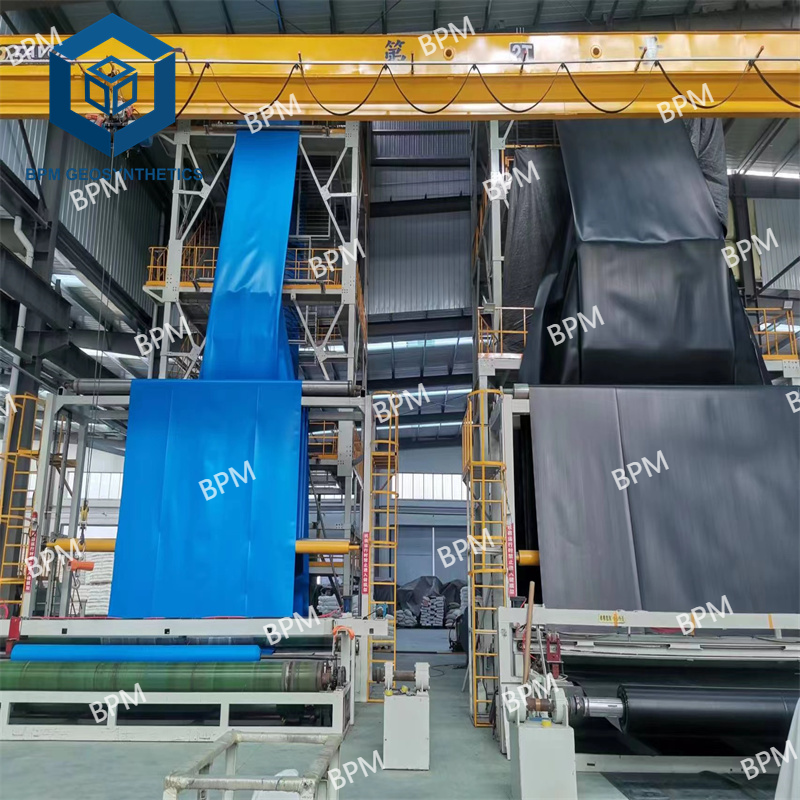
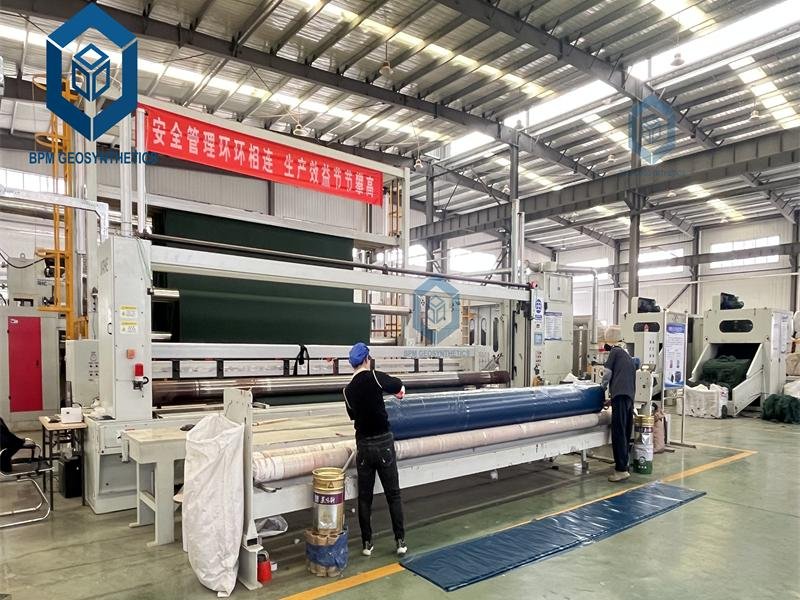
8. The Best Project Material Co., Ltd (BPM Geoliner) HDPE Geomembrane Liner – Best for Comprehensive Specifications & Global Versatility
BPM Geoliner produces high-quality HDPE liners fully compliant with GRI-GM13, offering exceptional value and performance.
Key Specifications:
- Thickness: 0.75–3.0 mm (common grades: 0.75 mm to 3.0 mm)
- Density: 0.94 g/cm³
- Tensile yield/break: 15–44 kN/m / 27–80 kN/m
- Puncture resistance: 320–960 N
- Tear resistance: 125–374 N
- OIT: ≥100 min standard, ≥500 min high-pressure
- Elongation at break: 700%
- Permeability: ≤10⁻¹³ cm/s
- Carbon black content: 2–3%
Features: Smooth or textured finishes; superior UV/chemical resistance; 50+ year lifespan when covered; 99% waterproof efficiency.
Applications: Landfills, mining tailings, aquaculture ponds, water reservoirs.
Pros: Detailed compliance data; versatile across project scales; competitive pricing. Cons: Export logistics may influence lead times.
Comparison Table: The 8 Best HDPE Geo Membranes
Rank | Brand/Product | Thickness Range (mm) | Tensile Yield (kN/m) | Puncture (N) | OIT (min) | Price Range ($/m²) | Best For |
1 | GSE HD (Solmax) | 0.75–3.0 | 22–44 | 480–960 | ≥400 HP | 2.50–5.00 | Overall Excellence |
2 | AGRU Sure-Grip | 1.0–3.5 | 25–50 | 500–1,000 | ≥120 | 4.00–6.50 | Slope Stability |
3 | Layfield Enviro 6000 | 1.0–2.5 | 25–45 | 400–700 | ≥100 | 3.00–5.00 | Enhanced Tensile |
4 | NAUE Carbofol | 1.0–3.0 | 22–44 | 480–960 | ≥500 HP | 3.50–5.50 | European Innovation |
5 | Atarfil HDPE | 1.0–3.0 | 20–45 | 400–800 | ≥100 | 2.80–4.50 | Extrusion Precision |
6 | Carthage Mills | 0.75–2.5 | 20–35 | 300–700 | ≥100 | 2.00–4.00 | Versatile US Supply |
7 | Raven HDPE | 1.0–2.0 | 18–30 | 300–600 | ≥100 | 1.80–3.50 | Specialized Containment |
8 | BPM Geoliner HDPE | 0.75–3.0 | 15–44 | 320–960 | ≥500 HP | 1.50–3.50 | Versatility & Value |
How to Choose the Right HDPE Geo Membrane
Assess site-specific factors: slope angle (textured for >20°), chemical exposure (verify resistance), load conditions. Select thickness (1.5–2.0 mm common for primary liners; 2.0–3.0 mm for high-stress). Confirm GRI-GM13 certification and request third-party test reports. Evaluate installation (thermal welding preferred; certified technicians reduce defects 20%). Factor total ownership cost: premium options save 15–40% long-term via durability.
Common Challenges & Solutions
Installation errors contribute to 15–20% issues: Use qualified welders and quality control testing. UV exposure: Install cover soil promptly. Material variability: Source from GRI-certified producers. Cost fluctuations: Lock in bulk pricing. Sustainability: Choose recyclable HDPE formulations.
Conclusion
The 8 best HDPE geo membranes—from Solmax GSE HD’s balanced excellence to BPM Geoliner’s comprehensive versatility—deliver superior impermeability, durability, and compliance in a USD 2.73 billion market growing at 5.88% CAGR. Prioritize GRI-GM13 specs, mechanical performance, and proven support for optimal project outcomes. For detailed quotes, samples, or tailored solutions, explore BPM Geoliner at https://bpmgeoliner.com/product/hdpe-geomembrane-liner/—a trusted option for effective, long-term containment.