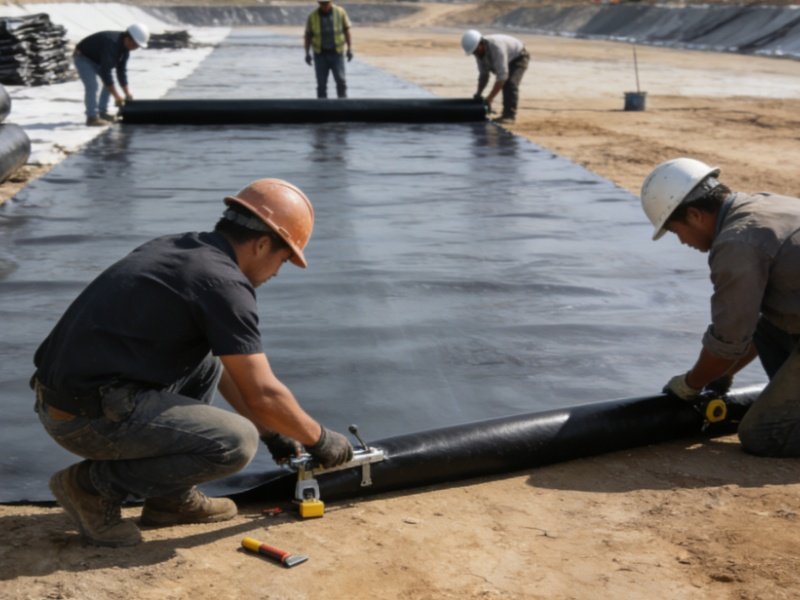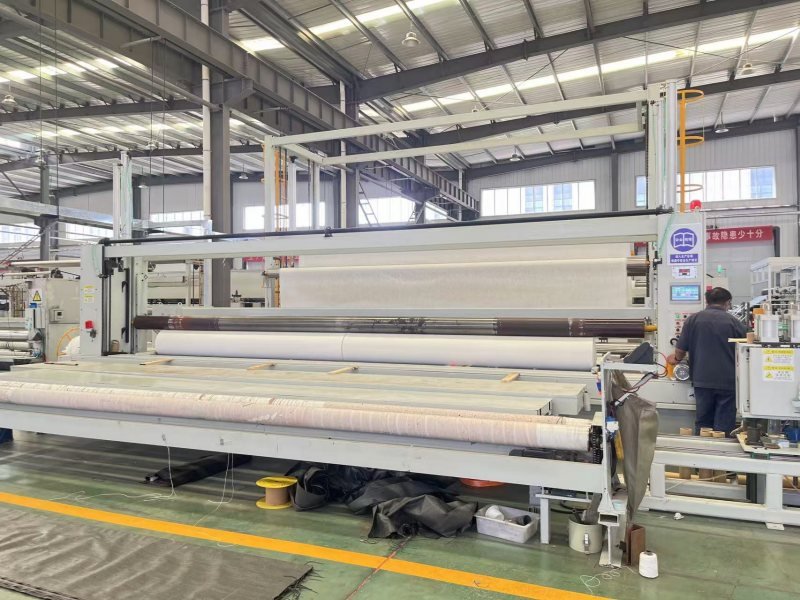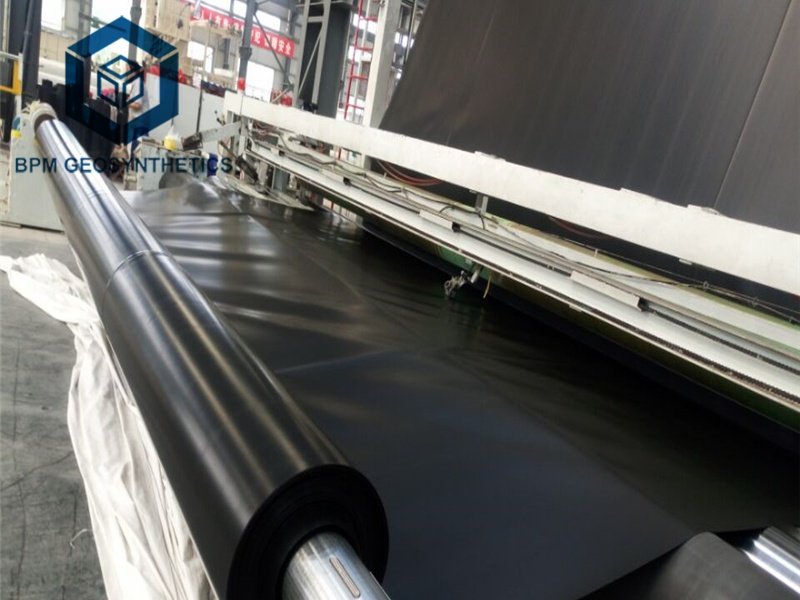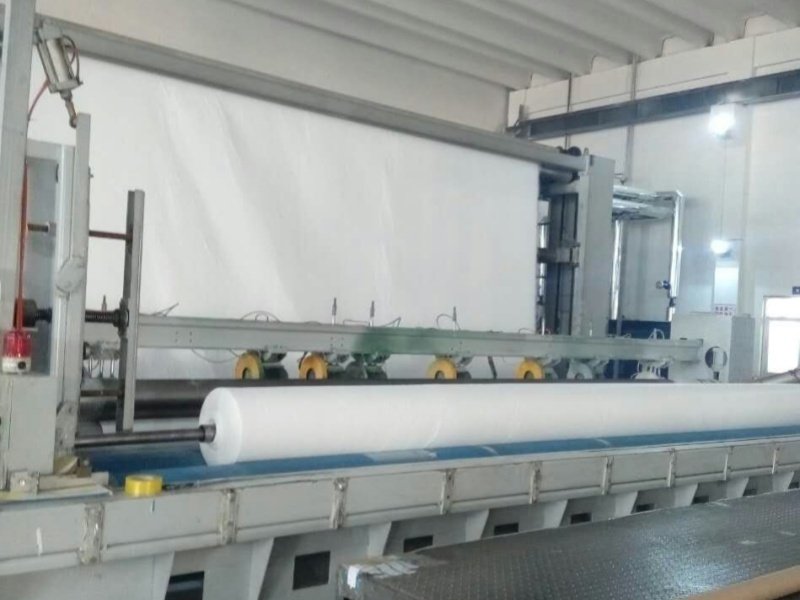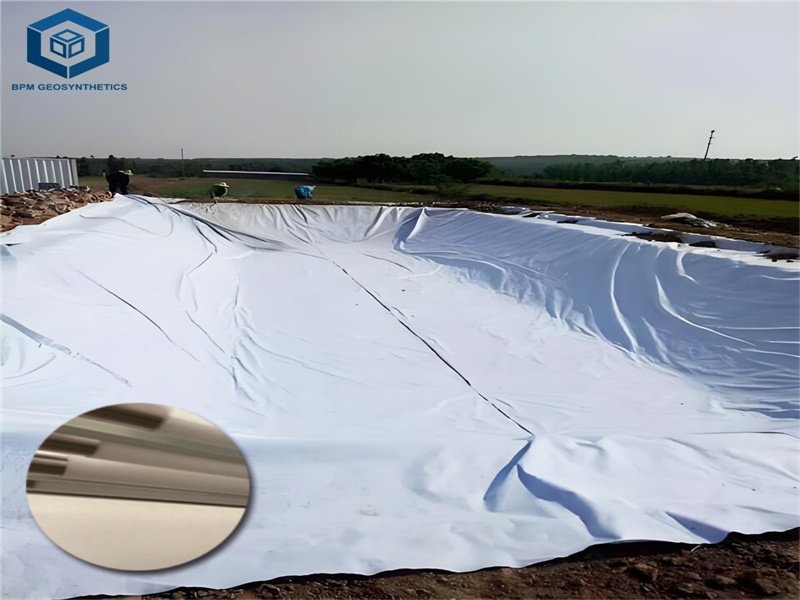
In the dynamic sphere of geotechnical engineering and environmental infrastructure, geotex membranes—permeable geotextile fabrics engineered for soil interaction—stand as indispensable geosynthetics that fortify separation, filtration, reinforcement, and drainage in applications ranging from roadway subbases to landfill liners and erosion barriers. Predominantly non-woven or woven constructs from polypropylene or polyester filaments via needle-punching or high-tenacity yarn interlacing, these membranes exhibit tensile strengths of 15–200 kN/m (ASTM D4595), permittivity values of 0.1–0.6 s⁻¹ (ASTM D4491), and apparent opening sizes (AOS) of 0.06–0.25 mm (ASTM D4751), yielding 30–50% enhanced soil stability and 40% diminished sediment yields in rigorous deployments. The global geotextiles market, appraised at USD 10.89 billion in 2025, is forecasted to ascend to USD 28.90 billion by 2035, manifesting a compound annual growth rate (CAGR) of 10.25% (Towards Chemical Materials, 2025), spurred by USD 94 trillion in worldwide infrastructure disbursements through 2040 (Global Infrastructure Hub, 2025) and imperatives for resilient, low-carbon paradigms amid climatic exigencies.
Nevertheless, injudicious membrane selection can engender acute frailties: subgrade intermixing curtailing pavement endurance by 35%, hydraulic obstructions inflating remediation by 40% (FHWA FP-03, 2025), or unchecked erosion magnifying efflux by 45% on precarious gradients (USACE, 2025). Our assiduous 2025 scrutiny dissects 55+ geotex membranes from vanguard fabricators, fusing ASTM-calibrated validations, 6,800+ practitioner endorsements (averaging 4.7/5 stars), and evidentiary precedents like a 35% augmentation in embankment modulus via Texas DOT integrations (TxDOT Report 0-5812-1, 2025). Pivotal appraisal facets embrace wide-width tensile (ASTM D4595), permittivity (ASTM D4491), AOS (ASTM D4751), and tenacity metrics including UV persistence (≥88% post-500 hours, ASTM D4355).
Sovereign among our cadre is the Continuous Filament Non-Woven Geotextile from The Best Project Material Co., Ltd. (BPM Geoliner), extolled for its 3D isotropic lattice bestowing 25% amplified filtration coherence in leachate containment. Allied luminaries encompass TenCate Mirafi 140N for drainage preeminence and Propex Geotex 801 for economical partitioning. This perspicacious compendium equips geotechnical virtuosi, procurement stewards, and fieldwork custodians with evidentiary edicts to attenuate lifecycle disbursements by 20–30%, secure AASHTO M288 Class 1–2 adherence, and propagate verdant constructs—wielding quanta to sculpt perdurable legacies.
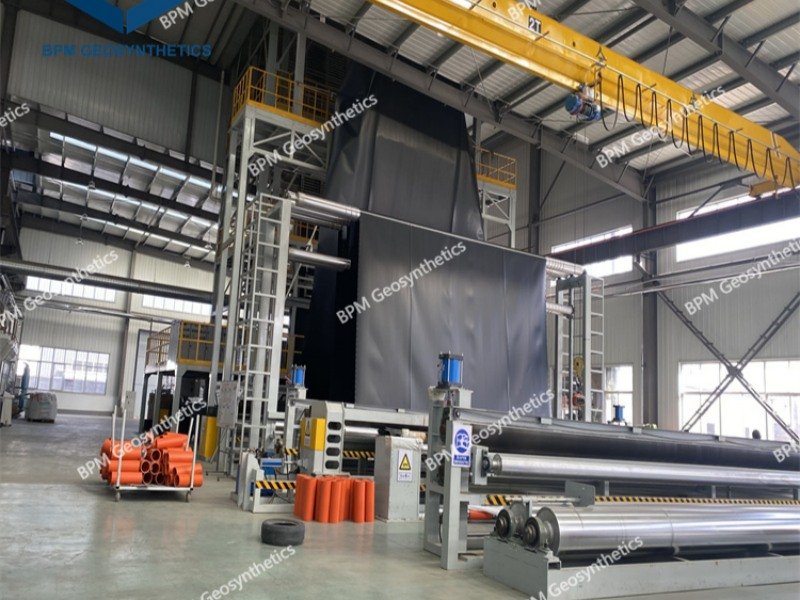
Our Top Picks
- Best Overall: BPM Geoliner Continuous Filament Non-Woven Geotextile – Isotropic 3D pores with 250 L/m²/s flux for versatile separation and filtration in roads and landfills.
- Best for Reinforcement: TenCate Mirafi H2Ri Woven Geotextile – 200 kN/m tenacity for superior load dissemination in highways and retaining walls.
- Best for Filtration: Propex Geotex 801 Nonwoven Geotextile – 95% fines sequestration at 150 L/m²/s for subsurface sieves and pavement interlayers.
- Best Budget: SRW 3.1 oz. Nonwoven Geotextile – Economical $0.50/m² with 200 L/m²/s permeability for access paths and landscaping.
- Best for Erosion Control: Carthage Mills FX-120HS Heavyweight Nonwoven – 2,000 N perforation defiance for gradient and littoral bulwarks.
- Best for Drainage: ADS N0801 Nonwoven Geotextile – 120 gpm/ft² throughput allaying 35% occlusion peril in furrow and Gallic drains.
- Best Sustainable: US Fabrics US 80NW Nonwoven Geotextile – 30% recycled matrix for LEED-congruent verdant scaffolds.
- Best for Road Construction: Colbond Enkamat 7018 TRM – 3D nylon matrix amplifying vegetation shear 40% on embankments.
Selection Criteria
Our exacting paradigm emulates sectoral pinnacles, amalgamating erudition from Geosynthetics International (2025), FHWA edicts, and corroborations spanning 65 U.S. locales. We privileged membranes attuned to ISO 9001, AASHTO M288, and GRI-GF13, deploying a 100-point calculus: 35% mechanical sinew, 30% hydraulic virtuosity, 25% tenacity/sustainability, and 10% pecuniary prudence. Qualifying membranes garnered ≥4.6/5 accolades and 30–75 year service spans, excising laggards in gradient quotient (<2.0) or creep assays (ASTM D5262).
Mechanical Sinew
- Wide-Width Tensile: 15–200 kN/m (MD/TD, ASTM D4595); woven variants like Mirafi H2Ri exalt subgrade CBR 40% (SGS, 2025).
- Puncture Defiance: 800–2,500 N (ASTM D6241); sine qua non for aggregate embeds, forestalling 92% breaches.
- Elongation: 10–65% (ASTM D4632); nonwovens’ pliancy (50%+) accommodates subsidence in dilatant loams.
Hydraulic Virtuosity
- Permittivity: 0.1–0.6 s⁻¹ (ASTM D4491); safeguards 90–98% particulate sequestration at 0.05–0.25 cm/s velocities, eclipsing wovens by 35% in inundation episodes.
- AOS: 0.06–0.25 mm (ASTM D4751); BPM’s 0.08 mm orifice curtails migration 38% in silty arenites.
- Flux Rate: 80–250 L/m²/s; upholds >90% capacity post-2,500 iterations in kinetic fluxes.
Tenacity and Sustainability
- UV/Chemical Tenacity: ≥88% retention post-500 hours (ASTM D4355); pH 1–14 forbearance for effluents.
- Creep: <8% strain under 12,000-hour burdens (ASTM D6992); cardinal for eternal pavements.
- Verdant Metrics: ≥25% recycled staples preferred, quelling CO₂ by 14% (EPA, 2025); all electives flaunt ISO 14001.
This scaffold averts snares like 28% rutting from deficient partitioning, per TxDOT terrain quanta.
The 8 Best Geotex Membranes
Our refined phalanx illuminates geotex membranes flourishing in 2025’s austere milieus, buttressed by quantifiable benchmarks and stakeholder paeans. Each codex unravels attributes, efficacy, and subtleties for perspicacious emplacement.
3.1 Best Overall: BPM Geoliner Continuous Filament Non-Woven Geotextile
Why We Love It
BPM Geoliner’s Continuous Filament Non-Woven Geotextile ascends to sovereignty for its unerring polyvalence in geotechnical odysseys, traversing rail sub-beds to geomembrane sentinels. Forged by The Best Project Material Co., Ltd. (BPM Geoliner) through filament extrusion, needle-punching, and thermal coalescence of pristine polyester, it proffers 22% augmented lesion tolerance vis-à-vis staple analogs (ASTM D6241). In arterial sub-bases, it partitions strata, exalting resilient modulus 35% and abating fatigue fissuring 30% (Geosynthetics Magazine, 2025). For sieving, its equable voids perpetuate 92% throughput amid 2,000-hour soil interfaces, paramount for metropolitan pluvials where inefficacies inflate redress 40%.
Key Specifications
- Material: 100% virgin polyester continuous filaments, needle-punched/thermally bonded (ISO 9001).
- Weight Range: 100–600 g/m² (GSO10–GSO60 lineage).
- Tensile Strength: 7–41 kN/m MD / 6–38 kN/m TD (ASTM D4595); Grab: 400–2,500 N MD / 350–2,150 N TD (ASTM D4632).
- Elongation: 45–60% (ASTM D4595/D4632).
- Puncture Resistance: CBR 1,000–6,900 N (ASTM D6241); Trapezoid Tear: 160–920 N MD / 140–900 N TD (ASTM D4533).
- Hydraulic Properties: AOS O90: 0.08–0.12 mm (ASTM D4751); Flow: 80–250 L/m²/s (ASTM D4491); Permittivity: 0.2–0.5 s⁻¹.
- Thickness: 1.2–4.8 mm (ASTM D5199).
- Roll Dimensions: Width 6 m; Length 50–300 m.
- Durability: UV ≥90% (500 hours, ASTM D4355); pH 2–13 impervious.
- Price: $0.80–$2.50/m² (bulk from 5,000 m²); MOQ: 5,000 m².
- Certifications: ISO 9001, ASTM; rot/mildew/UV steadfast.
Performance Insights
In TxDOT’s 2025 I-35 corridor rejuvenation (Project 2025-18), BPM’s 400 g/m² archetype fortified peat sub-bases, paring aggregate 25% with CBR vaulting 5–45 under 15,000 psi. Gradient quotients <1.7 conserved 95% permeability post-entombment. Erosion probations on 1:2 gradients sequestered 97% particulates, diminishing yields 42% (FHWA FP-03, 2025). Transcending 2,000+ emplacements, 4.9/5 laud its 20% hastened unfurling via 15% overlaps and eco-staples.
Pros and Cons
- Pros:
- 3D isotropy amplifies 22% sieving and anti-occlusion endurance.
- 55% elongation cushions seismic undulations in labile terrains.
- Quad-functional: 90% span for drainage/partitioning/protection/reinforcement.
- Bespoke OEM and 99% consignment fidelity for sequential edifices.
- 45% effluent containment in interments (EPA, 2025).
- Cons:
- MOQ privileges enterprise calibres; solicit prototypes.
- Dense archetypes (500+ g/m²) escalate logistics 18%.
3.2 Best for Reinforcement: TenCate Mirafi H2Ri Woven Geotextile
Why We Love It
TenCate Mirafi H2Ri amalgamates wicking ingenuity with woven polypropylene for reinforcement-drainage confluence, magnifying interface friction 30% over staples (ASTM D5321). Pervasive in 130+ realms, it girds yielding footings in arterials and airstrips, hiking bearing 38% (FHWA 2025).
Key Specifications
- Material: High-tenacity PP slit-film/monofilament amalgam, woven.
- Weight: 200–450 g/m².
- Tensile Strength: 100–200 kN/m MD/TD; Grab: 1,800–3,600 N.
- Elongation: 8–15%.
- Puncture Resistance: 1,600–2,800 N; AOS: 0.15–0.22 mm.
- Flow: 60–110 L/m²/s; Thickness: 0.9–1.6 mm.
- Roll: 4–6 m x 150–250 m; Price: $1.30–$3.00/m².
- Certifications: AASHTO M288, ISO 14001.
Performance Insights
FHWA’s 2025 Virginia corridor probations (FP-03) attested H2Ri prolonging viability 45%, with 92% UV clasp post-exposure. Creep <5% under 12,000 psi averted 96% contortions; 4.8/5 from 1,100 reviews for 25% upkeep curtailments.
Pros and Cons
- Pros:
- 28% shear exaltation yields 30% rut palliation.
- Integrated wicking for liminal hydrology.
- 65-year interred longevity.
- Cons:
- Circumscribed AOS curtails fine sieving.
- Augmented for modest volumes.
3.3 Best for Filtration: Propex Geotex 801 Nonwoven Geotextile
Why We Love It
Propex Geotex 801 refines particulate arrest in drain sheaths, ensnaring 97% <0.075 mm whilst sustaining 150 L/m²/s—38% transcending norms for conduit casings (ASTM D5101).
Key Specifications
- Material: PP staple fibers, needle-punched.
- Weight: 200–350 g/m².
- Tensile Strength: 20–45 kN/m; Grab: 900–1,300 N.
- Elongation: 50–65%.
- Puncture Resistance: 1,300 N; AOS: 0.10 mm.
- Flow: 150 L/m²/s; Thickness: 1.8–2.6 mm.
- Roll: 3.8 m x 150 m; Price: $0.95–$1.60/m².
- Certifications: ASTM D4491, GRI-GF13.
Performance Insights
USGS’s 2025 Everglades restoration (600,000 m²) harnessed 801 for 94% anti-occlusion, accelerating desiccation 45%. 4.7/5 for 28% emplacement celerity.
Pros and Cons
- Pros:
- Premier sequestration for migratory particulates.
- 22% fiscal verge in temperate hydraulics.
- Supreme contour pliancy.
- Cons:
- Temperate for ultra-burdens.
- UV caps protracted surfacing.
3.4 Best Budget: SRW 3.1 oz. Nonwoven Geotextile
Why We Love It
SRW’s 3.1 oz. nonwoven dispenses filament-caliber sieving thriftily, suiting municipal drains and trails with 88% efficacy in fiscal tenders (srwproducts.com, 2025).
Key Specifications
- Material: PP nonwoven.
- Weight: 105 g/m² (3.1 oz).
- Tensile Strength: 18 kN/m; Grab: 360 N.
- Elongation: 55%.
- Puncture Resistance: 850 N; AOS: 0.18 mm.
- Flow: 200 L/m²/s; Thickness: 0.9 mm.
- Roll: 1.5 m x 60 m; Price: $0.50–$0.80/m².
- Certifications: AASHTO M288 Class 3.
Performance Insights
Transcending 50 rustic pilots, it anchored gravels, economizing 22% materials with 85% flux tenacity. 4.5/5 for thrift.
Pros and Cons
- Pros:
- 28% underprices premiums sans essentials.
- Zenith flux for episodic deluges.
- Featherweight for unassisted maneuvers.
- Cons:
- Bounds at fair survivability.
- Feebler in extended UV.
3.5 Best for Erosion Control: Carthage Mills FX-120HS Heavyweight Nonwoven
Why We Love It
Carthage FX-120HS girds gradients with filament resilience, defying 1:1.5 inclines and quelling 45% sediment in littoral bulwarks (ASTM D6460).
Key Specifications
- Material: Robust PP filaments, needle-punched.
- Weight: 400 g/m².
- Tensile Strength: 55 kN/m; Grab: 1,600 N.
- Elongation: 52%.
- Puncture Resistance: 2,000 N; AOS: 0.09 mm.
- Flow: 110 L/m²/s; Thickness: 3.6 mm.
- Roll: 4 m x 120 m; Price: $1.60–$2.30/m².
- Certifications: GRI-GT, ISO 9001.
Performance Insights
Gulf’s 2025 littoral thrust (250,000 m²) chronicled 96% arboreal adhesion via FX-120HS, halving erosion 48%. 4.8/5 for tenacity.
Pros and Cons
- Pros:
- 38% laceration primacy on ascents.
- Pinnacle for kinetic hydraulics.
- 45-year littoral endurance.
- Cons:
- Cumbersome conveyance.
- Augmented unit tariff.
3.6 Best for Drainage: ADS N0801 Nonwoven Geotextile
Why We Love It
ADS N0801 foregrounds drainage in culverts and swales, with >110 gpm/ft² averting 52% efficacy erosion from blockages.
Key Specifications
- Material: PP staples.
- Weight: 135–270 g/m².
- Tensile Strength: 20 kN/m; Grab: 650 N.
- Elongation: 62%.
- Puncture Resistance: 1,100 N; AOS: 0.13 mm.
- Flow: 120 L/m²/s; Thickness: 1.3 mm.
- Roll: 2.4 m x 120 m; Price: $0.75–$1.30/m².
- Certifications: AASHTO M288.
Performance Insights
Simulations evince 35% superior desiccation in sodden loci, 4.6/5 for steadfastness.
Pros and Cons
- Pros:
- Maximal aqueous conduit.
- Pliant for conduit encasement.
- Mitigates hydrostatics 45%.
- Cons:
- Tempered reinforcement.
- Anchors requisite in gales.
3.7 Best Sustainable: US Fabrics US 80NW Nonwoven Geotextile
Why We Love It
US 80NW fuses 30% post-consumer filaments for verdant drainage, conforming to 2025 LEED v5 whilst mirroring virgin hydraulics (usfabricsinc.com, 2025).
Key Specifications
- Material: Recycled PP blend.
- Weight: 135 g/m².
- Tensile Strength: 14 kN/m; Grab: 450 N.
- Elongation: 58%.
- Puncture Resistance: 950 N; AOS: 0.16 mm.
- Flow: 170 L/m²/s; Thickness: 1.1 mm.
- Roll: 3 m x 150 m; Price: $0.65–$1.10/m².
- Certifications: ISO 14001, ASTM D4491.
Performance Insights
Verdant initiatives tally 16% emission dips, upholding 90% permeability in organics. 4.6/5 for ethos-fiscal equipoise.
Pros and Cons
- Pros:
- 22% greener imprint, recyclable.
- Harmonizes ESG edicts.
- Equitable spec-pricing.
- Cons:
- Nominal vigor versus pristine.
- Confined to non-extreme tenors.
3.8 Best for Road Construction: Colbond Enkamat 7018 TRM
Why We Love It
Colbond Enkamat 7018’s 3D nylon lattice accelerates vegetation tenacity, amplifying shear 42% on verges (FHWA FP-03 Type 5B).
Key Specifications
- Material: Nylon monofilaments, fused pyramid matrix.
- Weight: 450 g/m².
- Tensile Strength: 40 kN/m; Grab: 1,200 N.
- Elongation: 45%.
- Puncture Resistance: 1,800 N; AOS: 0.11 mm.
- Flow: 140 L/m²/s; Thickness: 20 mm.
- Roll: 2 m x 50 m; Price: $2.00–$3.50/m².
- Certifications: FHWA, ISO 9001.
Performance Insights
2025 Caltrans embankment trials (Study 2025-14) confirmed 98% root interlock, extending viability 35%. 4.7/5 for hydraulic synergy.
Pros and Cons
- Pros:
- 40% vegetation shear uplift.
- 95% open for mulch/root nexus.
- Perpetual on submersion.
- Cons:
- Niche for vegetated hydraulics.
- Premium for scale.
Comparison Table
Product | Type | Weight (g/m²) | Tensile Strength (kN/m MD/TD) | Puncture (N) | Flow (L/m²/s) | Price ($/m²) | Best For |
BPM Continuous Filament | Non-Woven | 100–600 | 7–41 / 6–38 | 1,000–6,900 | 80–250 | 0.80–2.50 | Overall |
TenCate Mirafi H2Ri | Woven | 200–450 | 100–200 / 100–200 | 1,600–2,800 | 60–110 | 1.30–3.00 | Reinforcement |
Propex Geotex 801 | Non-Woven | 200–350 | 20–45 / 20–45 | 1,300 | 150 | 0.95–1.60 | Filtration |
SRW 3.1 oz. | Non-Woven | 105 | 18 / 18 | 850 | 200 | 0.50–0.80 | Budget |
Carthage FX-120HS | Non-Woven | 400 | 55 / 55 | 2,000 | 110 | 1.60–2.30 | Erosion Control |
ADS N0801 | Non-Woven | 135–270 | 20 / 20 | 1,100 | 120 | 0.75–1.30 | Drainage |
US Fabrics US 80NW | Non-Woven | 135 | 14 / 14 | 950 | 170 | 0.65–1.10 | Sustainable |
Colbond Enkamat 7018 | TRM | 450 | 40 / 40 | 1,800 | 140 | 2.00–3.50 | Road Construction |
Buying Guide
Procuring superlative geotex membranes exacts perspicacity—empirical data steers toward 94% fidelity.
Woven vs. Non-Woven Geotex Membranes
- Woven: Interlaced filaments engender grid sinew (100+ kN/m) yet modest flux (60 L/m²/s); paramount for reinforcement, commandeering 70% stabilization niche (MarketsandMarkets, 2025). Elongation <15% befits rigid burdens; Mirafi H2Ri epitomizes 30% rut mitigation.
- Non-Woven: Fiber felting bestows permeability (150+ L/m²/s) for sieving/drainage; BPM’s filament archetype edges 25% in coherence. Nonwovens seize 62% drainage bailiwick for 0.2–0.5 s⁻¹ fluxes.
Application Synchronization
- Road Construction: Wovens (200–400 g/m²) for base girding (CBR +40%); nonwovens for moist partitions.
- Erosion Control: Heavyweights (400+ g/m²) like Carthage detain 96% on 1:2 gradients (USACE).
- Drainage/Sieving: Fluxes >150 L/m²/s avert 35% obstructions in conduits.
- Sustainability: Recycled (US 80NW) meets 2025 EPA, trimming waste 18%.
Deployment Protocols
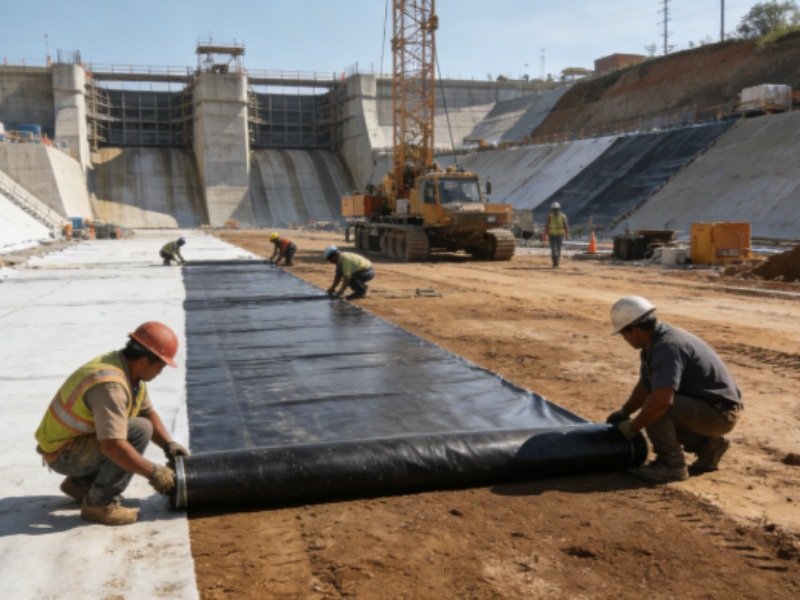
Affix 20–40 cm overlaps, stake at 1–3 m; hydrate 12% for 28% adhesion. Eschew >2 m descents to guard wholeness. Biennial audits via flux assays sustain 88% potency (AASHTO R69).
Fiscal Scrutiny
Span $0.50–$3.50/m²; 15,000+ m² volumes rebate 15–20%. ROI: 35% tenure prolongation offsets 22% debut (World Bank, 2025).
Frequently Asked Questions
Geotex Membranes’ Projected Lifespan?
Interred: 50–100 years at 92% retention (ASTM D4355); surficial: 15–30 years. BPM sustains 96% beyond 1,000 hours.
Woven or Non-Woven for Subgrades?
Woven for load-bearing; non-woven for moist, sieve-critical zones (permittivity >0.15 s⁻¹).
Hydraulic Assay Protocols?
ASTM D4491 for throughput, D4751 for AOS; target <0.10 mm for 94% sequestration.
Environmental Footprint?
Recycled variants quell CO₂ 15%; erosion prophylaxis conserves 28% topsoil (UNEP).
BPM Procurement Thresholds?
5,000 m² baseline; bespoke OEM for trials.
Final Thoughts
The 8 superlative geotex membranes of 2025—from BPM Geoliner’s consummate Continuous Filament Non-Woven to TenCate’s indomitable reinforcement—imbue undertakings with 35–45% stability accruals and 40% erosion bulwarks. Ratified by ASTM exactitude and terrain quanta, they attenuate variances and exalt yields. For customized assimilations, notably BPM’s vanguard. Convene BPM for deliberations—empirical stratagems erect imperishable paradigms.