1. What Is a Geomembrane Welding Machine?
A geomembrane welding machine is a specialized device designed to create strong, durable, and leak – proof seams between overlapping sections of geomembrane liners. These machines utilize heat, pressure, or a combination of both to fuse the thermoplastic materials of the geomembranes together, forming a continuous barrier essential for various containment and environmental protection applications.
The integrity of the welded seam is paramount to the overall performance of the geomembrane lining system, preventing leakage and ensuring the long – term effectiveness of the barrier。Geomembrane welding machines come in various types and configurations, each suited to different project requirements, geomembrane materials, and site conditions.
1.1 Key Components
Heating System: Hot wedge (300–450°C), hot air (400–600°C), or extrusion (500–600°C) mechanisms melt geomembranes for bonding.
Pressure Rollers: Apply 50–150 kN/m² to fuse molten layers, ensuring uniform seams (12–40 mm wide).
Control Unit: Digital interfaces regulate temperature (±2°C), speed (0.5–10 m/min), and pressure, reducing errors by 20%, per Leister data.
Drive Mechanism: Motorized tracks or wheels maintain consistent speeds, improving seam quality by 15%。
Cooling System: Air or water cooling solidifies seams in 5–10 seconds, per ASTM D6392.
2. How Does a Geomembrane Welding Machine Work?
2.1 Basic Principles of Operation
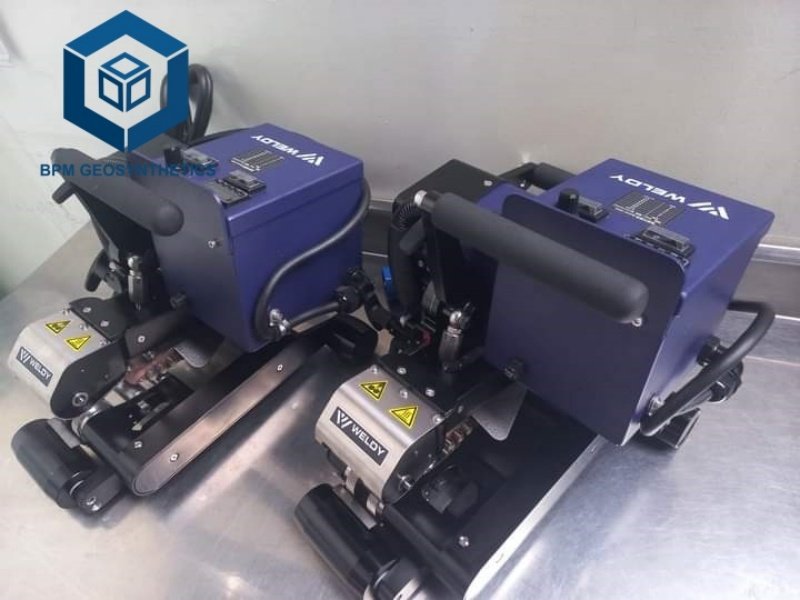
At its core, a geomembrane welding machine functions by applying heat and pressure to the overlapping edges of geomembrane materials. This process melts the thermoplastic layers, allowing them to fuse together and form a strong, impermeable seam.
2.2 Heat Application
The heating element is a critical component of the welding machine. Depending on the type of machine, heat can be applied in several ways:
Hot Wedge Welding: This method uses a heated wedge to melt the geomembrane material. The wedge is typically made of metal and is heated to temperatures ranging from 300°C to 450°C. As the wedge moves along the seam, it melts the material, creating a molten layer that can be fused together.
Hot Air Welding: In this method, a stream of hot air is directed at the seam. The hot air, which can reach temperatures between 400°C and 600°C, softens the geomembrane material, making it pliable enough to be joined. This method is often used for thinner materials and in applications where flexibility is required.
Extrusion Welding: This technique involves melting a plastic welding rod and extruding it into the seam. The extrusion process ensures that the molten material is evenly distributed, creating a strong bond between the geomembrane layers.
2.3 Pressure Application
Once the material is heated and softened, pressure is applied to ensure a proper bond. Pressure rollers are commonly used to press the overlapping layers together. The pressure applied can range from 50 kN/m² to 150 kN/m², depending on the material and the required seam strength. The rollers ensure that the molten material is evenly distributed and that the seam is free of voids or imperfections.
2.4 Control and Calibration
Modern geomembrane welding machines come equipped with advanced control systems that allow operators to precisely regulate temperature, speed, and pressure. These controls are essential for achieving consistent and reliable welds. Digital interfaces enable operators to set and monitor parameters with high accuracy, often within a range of ±2°C for temperature and ±0.1 m/min for speed. Proper calibration of these parameters is crucial for the success of the welding process.
2.5 Welding Process
The welding process typically involves the following steps:
- Preparation: The geomembrane sheets are laid out, and the edges to be welded are cleaned and inspected for any defects or debris. Proper alignment is crucial to ensure a smooth and effective weld.
- Heating: The welding machine is activated, and the heating element begins to melt the geomembrane material. The operator monitors the temperature and adjusts it as necessary to ensure optimal melting.
- Welding: As the material melts, the pressure rollers move along the seam, applying consistent pressure to fuse the layers together. The operator maintains a steady speed to ensure uniformity in the weld.
- Cooling: After the seam is welded, it is allowed to cool. Cooling can be accelerated using air or water cooling systems, which help solidify the seam quickly and reduce the risk of defects.
- Inspection: The final step involves inspecting the seam for any signs of weakness or imperfections. Non – destructive testing methods, such as visual inspection or pressure testing, are commonly used to ensure the integrity of the weld.
3. What Are the Different Types of Geomembrane Welding Machines Available?
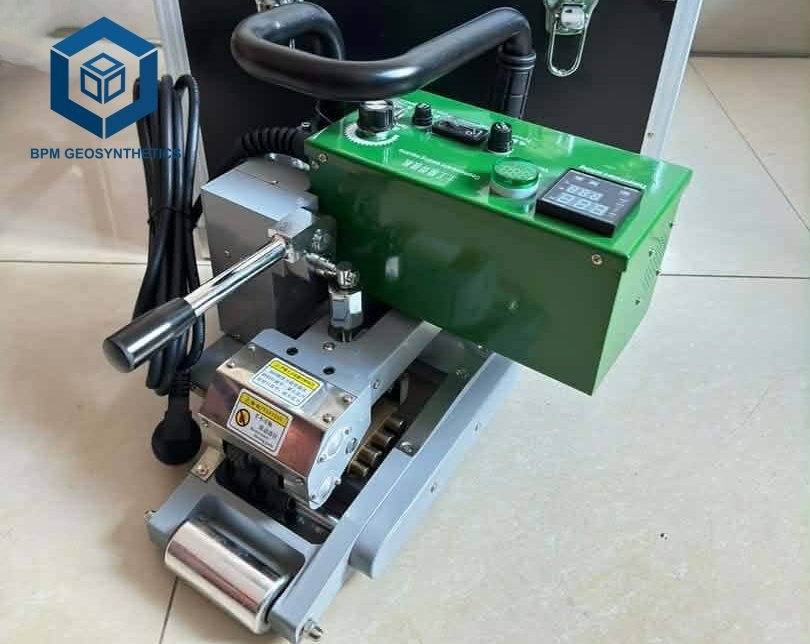
3.1 Types of Geomembrane Welding Machines
1. Hot Wedge Welding Machines
Hot wedge welding machines are one of the most commonly used types of geomembrane welding equipment. They utilize a heated metal wedge to melt the geomembrane material, allowing it to fuse together.
Working Principle: The hot wedge, typically heated to temperatures between 300°C and 450°C, is pressed against the overlapping edges of the geomembrane. As the wedge moves along the seam, it melts the material, creating a molten layer that can be fused together under pressure.
Advantages: This method is highly effective for thicker materials like high – density polyethylene (HDPE) and provides strong, durable seams. It is also suitable for large – scale projects due to its high welding speed and consistent results.
2. Hot Air Welding Machines
Hot air welding machines use a stream of hot air to soften the geomembrane material, making it pliable enough to be joined.
Working Principle: The hot air, which can reach temperatures between 400°C and 600°C, is directed at the seam. The softened material is then pressed together using pressure rollers to form a strong bond.
Advantages: This method is highly effective for thinner materials and is known for its flexibility and ease of use. It is also portable, making it suitable for on – site repairs and smaller projects.
3. Extrusion Welding Machines
Extrusion welding machines use a plastic welding rod that is fed into a heated barrel, melted, and extruded into the seam.
Working Principle: The extrusion process ensures that the molten material is evenly distributed, creating a strong bond between the geomembrane layers. The extrusion head moves along the seam, depositing the molten material and fusing it under pressure.
Advantages: This method is highly effective for thick materials and provides strong, reliable seams. It is also suitable for complex projects where a high degree of precision is required.
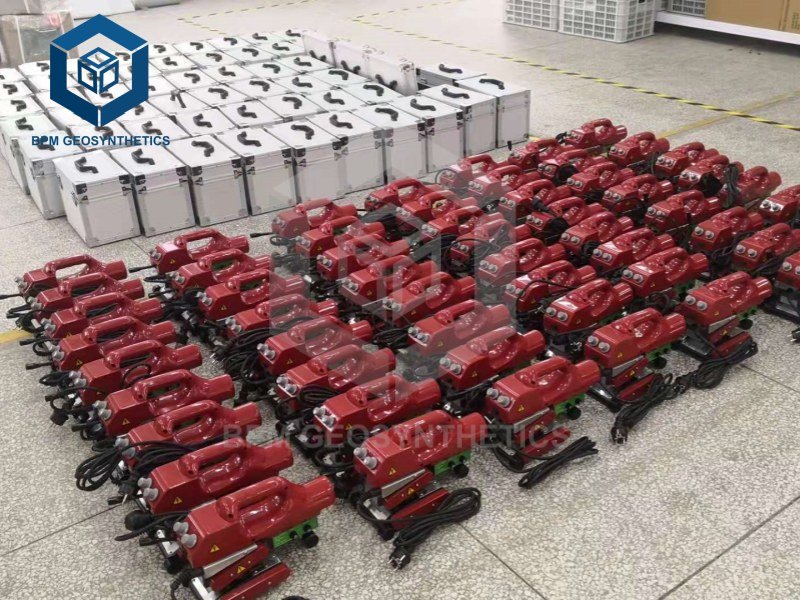
4. Automated Welding Systems
Automated welding systems are designed for high – volume production environments and offer increased efficiency and consistency.
Working Principle: These systems use advanced control units to regulate temperature, speed, and pressure, ensuring uniform and reliable welds. They are often equipped with multiple welding heads and can handle large – scale projects with ease.
Advantages: Automated welding systems offer high – speed welding, consistent seam quality, and reduced labor costs. They are ideal for large – scale containment systems and industrial applications.
5. Bi – Directional Welding Machines
Bi – directional welding machines are designed to weld in both directions, providing increased flexibility and accuracy.
Working Principle: These machines can move in both forward and reverse directions, allowing for precise alignment and welding in tight or complex layouts. They are equipped with advanced control systems to ensure uniform and reliable welds.
Advantages: Bi – directional welding machines offer increased accuracy and reduced turnaround time. They are ideal for modular systems and projects with complex layouts.
3.2 How to Choose the Right Geomembrane Welding Machine?
When evaluating a geomembrane welding machine, it’s essential to consider the following factors:
Material Type: HDPE, LLDPE, PVC, etc.
Seam Strength Requirements: Tensile strength, peel resistance
Project Scale & Location: In – field mobility vs. factory automation
Weld Speed: Required production output
Environmental Conditions: Cold, wind, humidity
Welding Parameters: Temperature, speed, and pressure settings for optimal seam quality.
4. Summary
A geomembrane welding machine is a crucial tool in modern geosynthetic applications. It offers precision, efficiency, and versatility for creating durable, impermeable seams.When choosing a geomembrane welding machine, it is essential to consider factors such as material type, seam strength requirements, project scale and location, weld speed, environmental conditions, and welding parameters. The benefits of using a geomembrane welding machine include high weld strength, cost – effectiveness, environmental compliance, and versatility.