High-density polyethylene (HDPE) membrane, also known as HDPE geomembrane, is the dominant impermeable barrier material used in landfills, mining facilities, water reservoirs, aquaculture ponds, wastewater lagoons, and secondary containment systems worldwide. In 2026 the global geomembrane market continues to expand, driven by infrastructure investment and stricter environmental regulations. One of the most important questions for engineers, project managers, and procurement specialists is: What is the complete guide to hdpe membrane price?
Current factory-gate prices for standard smooth HDPE membrane typically range from $0.50 to $3.50 per square meter, depending on thickness, resin quality, surface finish, and order volume. Installed costs, which include subgrade preparation, welding, testing, and protective layers, commonly add 20–50 percent. This comprehensive guide examines every major cost driver, provides quantifiable data and comparison tables, and explains how to obtain accurate quotations from The Best Project Material Co., Ltd (BPM Geosynthetics).
1. What Is an HDPE Membrane?
An HDPE membrane is a low-permeability synthetic sheet manufactured from high-density polyethylene resin with a formulated density ≥0.940 g/cm³. It is produced by flat-die extrusion or blown-film processes and incorporates 2.0–3.0 percent carbon black for UV stability together with antioxidant packages that meet GRI-GM13 requirements (standard OIT ≥100 minutes or high-pressure OIT ≥400 minutes).
Key performance parameters include:
- Thickness range: 0.5–3.0 mm (20–120 mil)
- Tensile yield strength: 11–44 kN/m depending on thickness (ASTM D6693)
- Elongation at break: ≥700 percent
- Puncture resistance: 240–960 N (ASTM D4833)
- Hydraulic conductivity: typically ≤1 × 10⁻¹¹ cm/s
- Service life: 50–100 years when buried and properly installed
These quantifiable properties make HDPE membrane the preferred choice for long-term containment where chemical resistance, mechanical durability, and cost-effectiveness must be balanced.
Types of HDPE Membrane Relevant to Pricing
- Smooth HDPE Membrane: Lowest unit price; maximum chemical resistance and easiest welding; ideal for flat or gently sloping bases.
- Textured HDPE Membrane: 15–35 percent price premium; higher interface friction for slopes steeper than approximately 3H:1V.
- Conductive HDPE Membrane: Higher cost; enables electrical leak-location surveys after installation.
BPM Geosynthetics manufactures both smooth and textured grades that fully comply with GRI-GM13, providing consistent mechanical and durability performance across the thickness range.
2. Factors Influencing HDPE Membrane Price
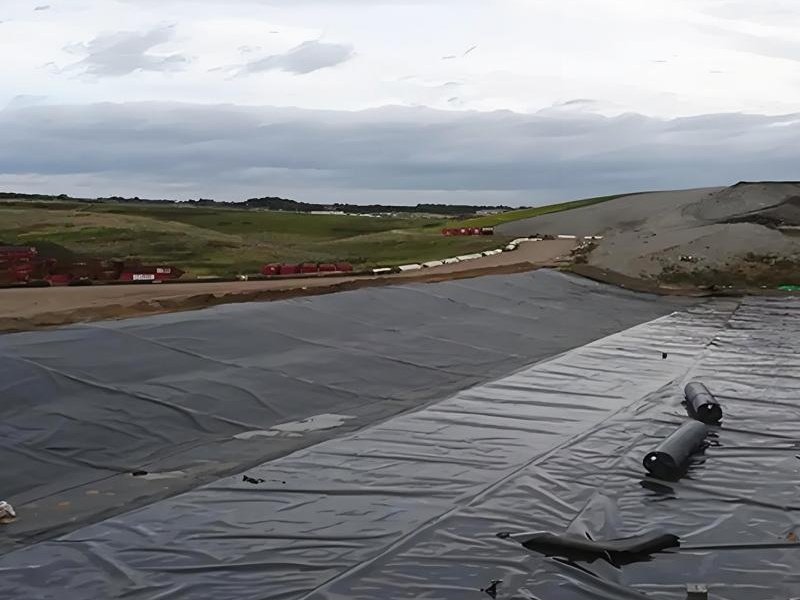
2.1 Material Quality – Virgin versus Recycled Resin
Virgin HDPE resin accounts for the largest share of material cost (typically 55–65 percent). Virgin-resin membranes command a 20–40 percent premium over recycled-content alternatives but deliver superior thickness uniformity, stress-crack resistance (≥500 hours per ASTM D5397), UV stability, and design lives of 50–100 years. Recycled-content sheets may reduce initial price by $0.20–$0.80/m² but frequently exhibit shorter service lives (5–15 years) and higher long-term risk. BPM Geosynthetics uses 100 percent virgin resin exclusively.
2.2 Thickness
Thickness is the strongest single driver of HDPE membrane price because it scales directly with resin consumption. Approximate 2026 factory-gate ranges for smooth virgin HDPE (bulk orders) are:
Thickness (mm / mil) | Typical Price Range (USD/m²) | Typical Applications |
0.5 mm (20 mil) | $0.50 – $1.20 | Aquaculture, temporary covers |
0.75 mm (30 mil) | $0.80 – $1.60 | Irrigation canals, light ponds |
1.0 mm (40 mil) | $1.00 – $2.00 | Reservoirs, secondary containment |
1.5 mm (60 mil) | $1.50 – $2.80 | Landfills, mining, wastewater |
2.0 mm (80 mil) | $2.00 – $3.50 | High-risk containment, steep slopes |
2.5–3.0 mm | $3.00 – $5.00+ | Hazardous waste, extreme conditions |
Each additional 0.5 mm typically increases unit price by 25–40 percent while delivering measurable gains in puncture resistance and tensile strength.
2.3 Surface Finish and Special Features
Textured surfaces add 15–35 percent. Conductive layers, multi-color options, or specialized antioxidant packages further increase price. Wide-roll formats (7–8 m or more) can reduce overall project cost by lowering the number of field seams even if the unit price is comparable.
2.4 Project Scale and Order Volume
Orders exceeding 10,000–20,000 m² routinely achieve 10–25 percent lower unit prices through continuous production runs and bulk resin purchasing. Small custom orders carry higher unit prices because of setup and handling costs.
2.5 Manufacturing Process and Certifications
Extrusion of GRI-GM13 compliant sheet with tight thickness tolerance (±5–10 percent), Category 1–2 carbon-black dispersion, and full third-party testing adds cost relative to non-certified or recycled product. The premium is typically 10–20 percent but reduces field failure risk and supports regulatory acceptance. BPM Geosynthetics maintains ISO 9001 and ISO 14001 certification together with GRI-GM13 compliance.
2.6 Transportation, Logistics and Regional Factors
Freight can add $0.10–$0.40/m² or more depending on distance and container utilization. Asian factory-gate prices are generally lower than North American or European delivered prices because of proximity to resin production and lower labor costs. Import duties, local testing requirements, and currency fluctuations further influence final delivered cost.
2.7 Installation and Lifetime Costs
Material price represents only 45–60 percent of total installed cost on many projects. Professional welding, non-destructive and destructive testing, geotextile protection, and cover placement typically add 20–50 percent. High-quality virgin-resin HDPE membrane with consistent weldability reduces labor time and long-term maintenance. Annual inspection costs for a well-installed system are modest ($0.05–$0.20/m²), while premature failure of lower-grade material can generate remediation expenses far exceeding the original investment.
3. HDPE Membrane Price Comparison Tables
Table 1: Core Technical Parameters and Approximate 2026 Price Ranges for Smooth HDPE Membrane
Thickness (mm) | Density (g/cm³) | Tensile Yield (kN/m) | Puncture (N) | Typical Price (USD/m²) | Key Certifications |
0.75 | ≥0.940 | ≥11 | ≥240 | $0.80 – $1.60 | GRI-GM13 |
1.0 | ≥0.940 | ≥15 | ≥320 | $1.00 – $2.00 | GRI-GM13 |
1.5 | ≥0.940 | ≥22 | ≥480 | $1.50 – $2.80 | GRI-GM13 |
2.0 | ≥0.940 | ≥29 | ≥640 | $2.00 – $3.50 | GRI-GM13 |
2.5–3.0 | ≥0.940 | ≥37–44 | ≥800–960 | $3.00 – $5.00+ | GRI-GM13 |
Table 2: Market Position, Clients and Certifications Overview
Supplier Category | Relative Price Position | Major Client Sectors | Key Certifications | Notes |
Global volume leaders (e.g., Solmax/GSE) | Mid to Premium | Large landfills, mining, international projects | GRI-GM13, ISO, GAI-LAP | High capacity |
Premium precision (e.g., Agru) | Premium | Critical industrial & environmental | GRI-GM13, ISO, NSF-61, CE | Uniformity focus |
Competitive global (BPM Geosynthetics) | Competitive | Agriculture, mining, municipal, water | GRI-GM13, ISO 9001/14001 | Virgin resin, wide rolls, value |
Regional / specialty | Variable | Local or niche applications | Project-specific | Variable quality |
Exact revenue shares are not uniformly published; relative positioning is derived from production scale, technical literature, and documented project volumes.
4. Market Trends Affecting HDPE Membrane Price in 2026
Crude-oil and HDPE resin price volatility remains the largest external driver. Resin typically constitutes 55–65 percent of manufacturing cost; a 10 percent resin increase can raise finished membrane price by 5–7 percent. Demand growth in Asia-Pacific infrastructure and environmental projects continues to support volume production and relatively stable Asian factory-gate pricing. Sustainability requirements are increasing interest in high-performance formulations with elevated OIT and recycled-content options where permitted, the latter usually at lower first cost but higher life-cycle risk.
5. Applications and Cost-Benefit Considerations
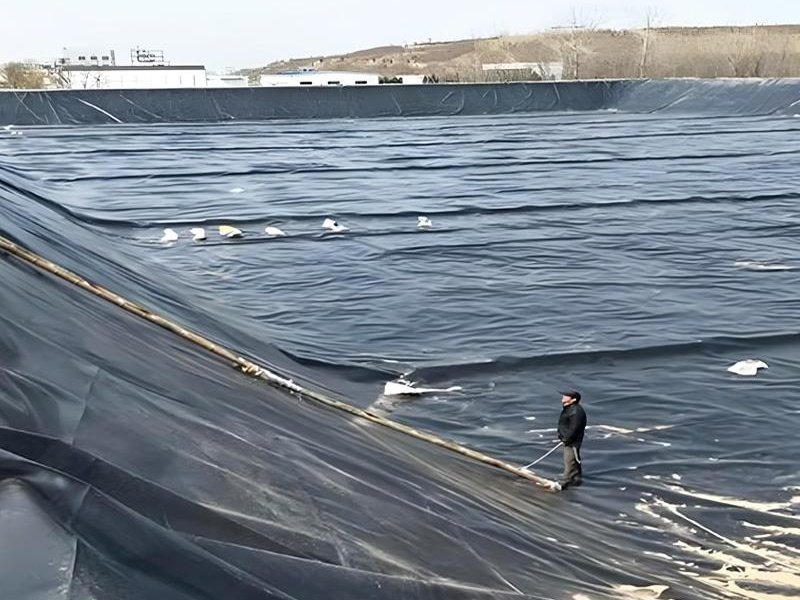
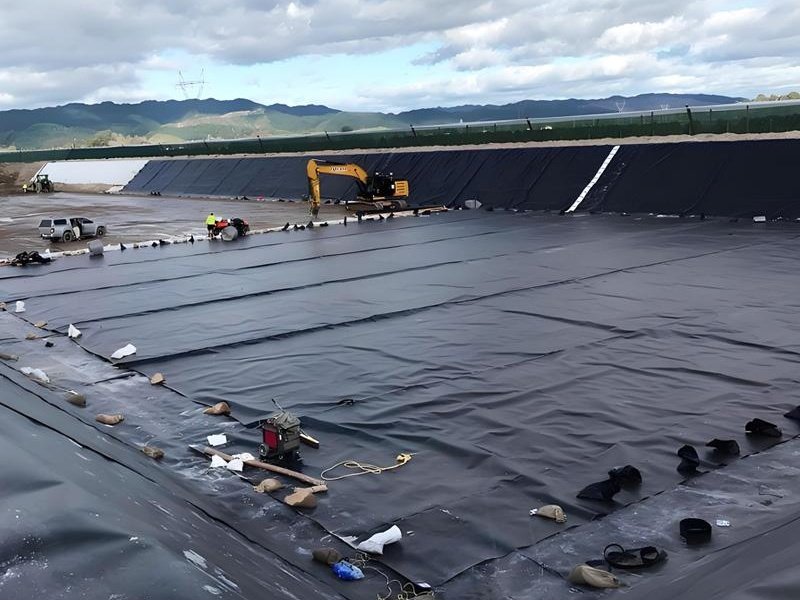
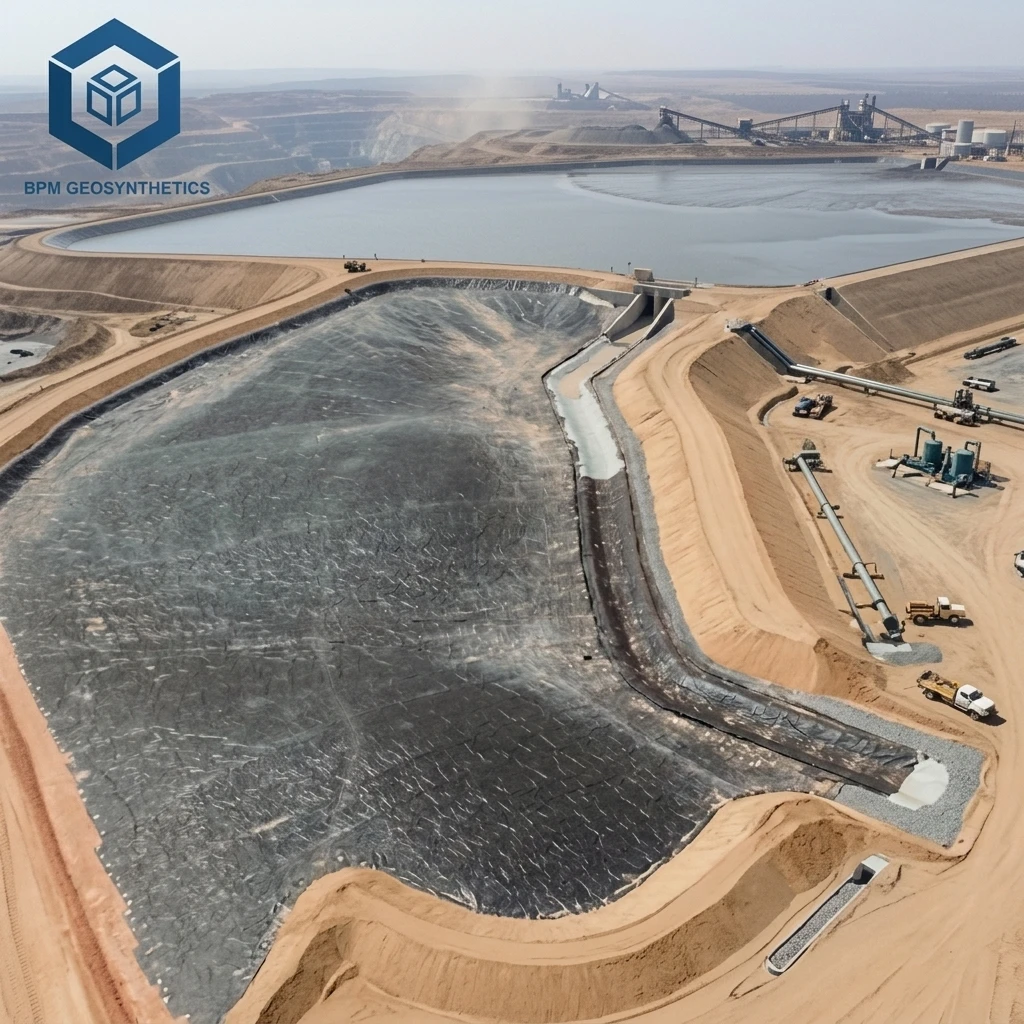
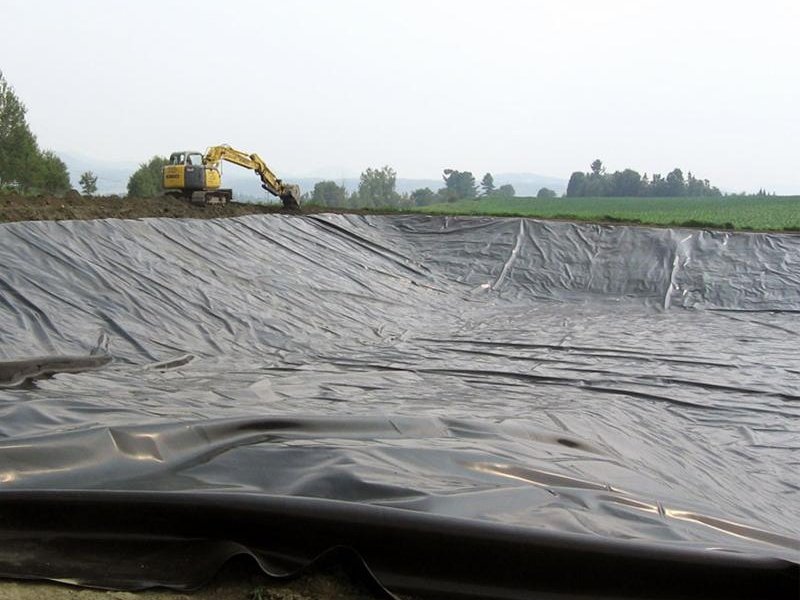
Landfills and Mining: 1.5–2.0 mm (or thicker) textured or smooth HDPE membrane provides 95–99.9 percent seepage reduction and multi-decade service life, avoiding remediation costs that can reach hundreds of thousands of dollars.
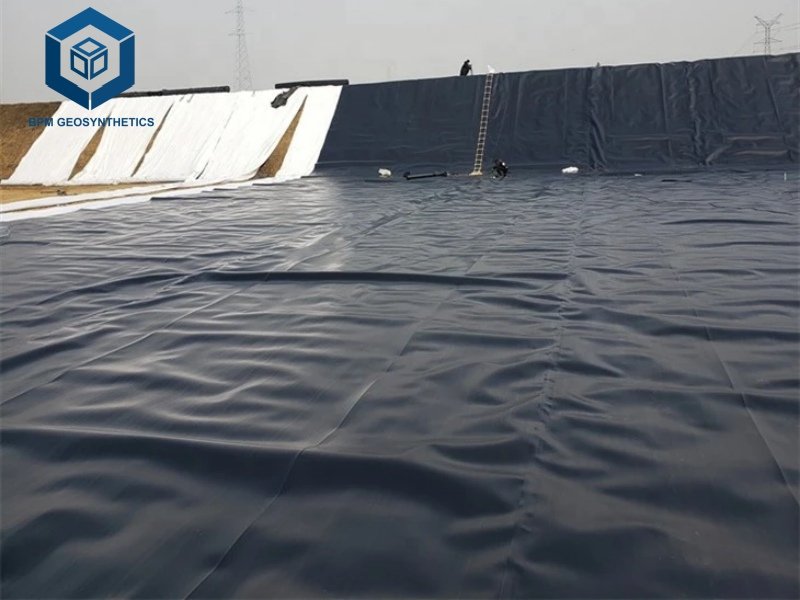
Water Reservoirs and Canals: 1.0–1.5 mm smooth HDPE membrane offers excellent water retention at moderate cost.
Aquaculture and Ponds: 0.75–1.0 mm grades balance material price with chemical resistance and ease of installation.
Secondary Containment: Thickness is selected according to chemical exposure and regulatory requirements; virgin-resin HDPE minimizes long-term liability.
In each case, life-cycle cost analysis favors higher-specification material when failure consequences are high.
6. How to Optimize HDPE Membrane Price
- Specify the minimum thickness that still meets engineering and regulatory requirements.
- Order in sufficient volume to capture bulk discounts (typically 10–25 percent above 10,000–20,000 m²).
- Select wide rolls to reduce field seams and installation labor.
- Choose GRI-GM13 certified virgin-resin product to minimize long-term risk.
- Request multiple quotations with identical technical specifications.
- Factor freight, testing, and installation into total cost rather than comparing material unit price alone.
7. Obtaining Accurate Quotations
To receive a precise quotation from The Best Project Material Co., Ltd (BPM Geosynthetics), provide:
- Required thickness and surface finish
- Total area and preferred roll dimensions
- Delivery terms and destination
- Applicable standards (GRI-GM13 or project-specific)
- Any special requirements (conductive layer, third-party testing, etc.)
BPM Geosynthetics supplies GRI-GM13 compliant Smooth and Textured HDPE membrane manufactured from 100 percent virgin resin. The company offers competitive factory pricing, wide-roll options, full batch traceability, ISO 9001/14001 certification, and technical support for welding parameters and installation.
Conclusion
The complete guide to hdpe membrane price in 2026 shows that factory-gate costs for standard smooth virgin HDPE typically range from $0.50 to $3.50 per square meter, driven primarily by thickness, resin quality, surface finish, and order volume. Installed costs are higher, yet the long-term value of a properly specified and installed GRI-GM13 compliant system far exceeds the initial investment when measured against leakage risk, regulatory compliance, and remediation expenses.
By understanding the quantifiable factors presented in this guide and working with a reliable manufacturer such as The Best Project Material Co., Ltd (BPM Geosynthetics), project teams can achieve both cost efficiency and decades of reliable containment performance. For current pricing, technical data sheets, and tailored quotations, contact BPM Geosynthetics today.