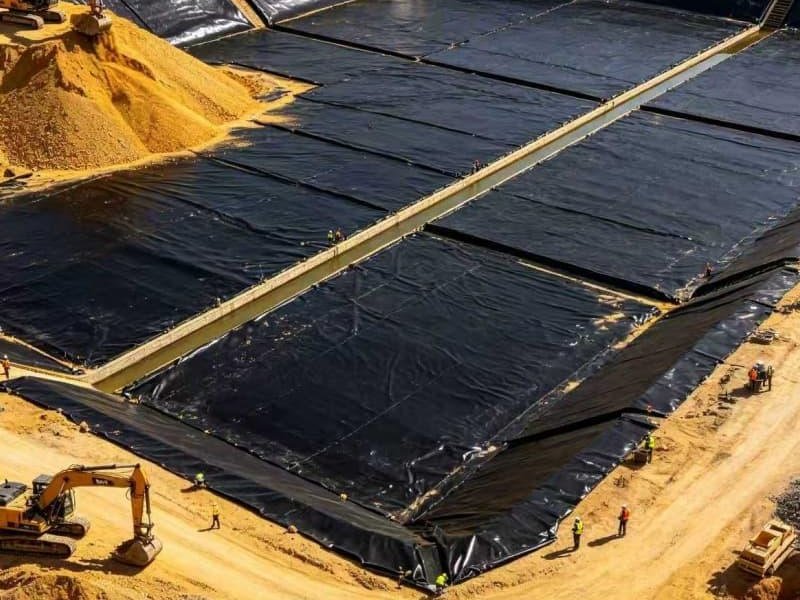
Large reservoirs play an essential role in agricultural irrigation, aquaculture, industrial water storage, and municipal water management. Without an effective lining system, water can seep into the surrounding soil, resulting in water loss, higher operating costs, and potential environmental concerns. Choosing the right LLDPE pond liner is therefore an important step in reservoir construction.
Linear low-density polyethylene (LLDPE) geomembranes are valued for their flexibility, high elongation, and ability to accommodate certain forms of ground movement. Compared with more rigid liner materials, LLDPE can be particularly attractive for reservoirs with irregular contours or subgrades where differential settlement is a design consideration.
This review compares seven LLDPE pond liner options and product categories for large reservoirs, focusing on material characteristics, application suitability, installation, and procurement value. The selection is a practical buyer’s guide rather than a laboratory-verified ranking.
What to Consider When Choosing an LLDPE Pond Liner
Before purchasing a reservoir liner, buyers should evaluate the following factors:
Flexibility: LLDPE is suitable for applications requiring deformation capability and adaptation to irregular surfaces.
Thickness: The correct thickness depends on reservoir depth, subgrade conditions, installation loads, and project specifications.
UV resistance: For exposed reservoirs, request documentation confirming the liner’s weathering and UV-resistance properties.
Puncture and tear resistance: These properties help determine whether the liner can withstand site conditions and handling.
Seam quality: Professional welding, seam inspection, and construction quality assurance are essential for a reliable lining system.
Total cost: Compare material, freight, protective geotextile, installation, testing, and maintenance rather than considering the price per square meter alone.
The 7 Best LLDPE Pond Liners for Large Reservoirs Reviewed
1. BPM Geosynthetics LLDPE Geomembrane — Best for Customized Reservoir Projects
Best for: Agricultural reservoirs, irrigation ponds, aquaculture facilities, and large water-storage projects.
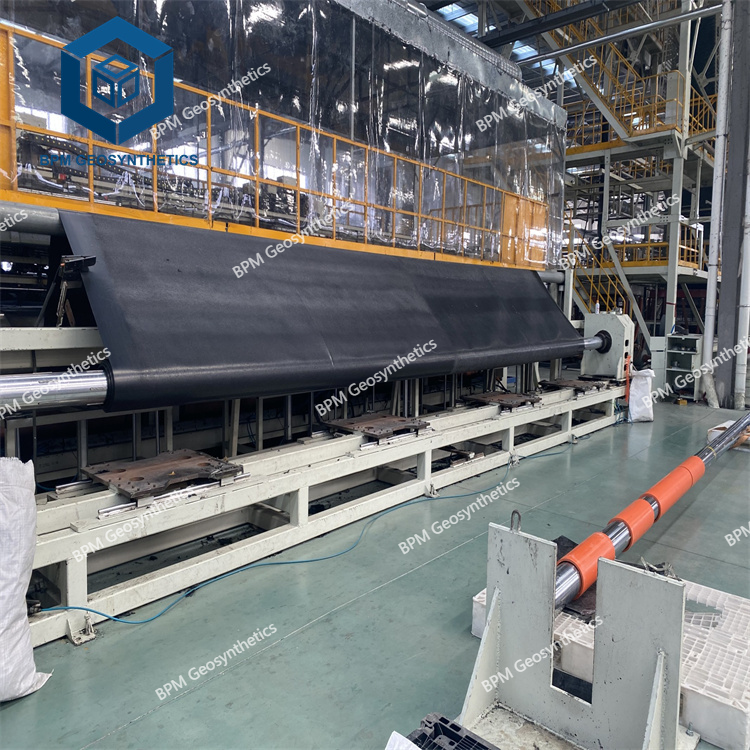
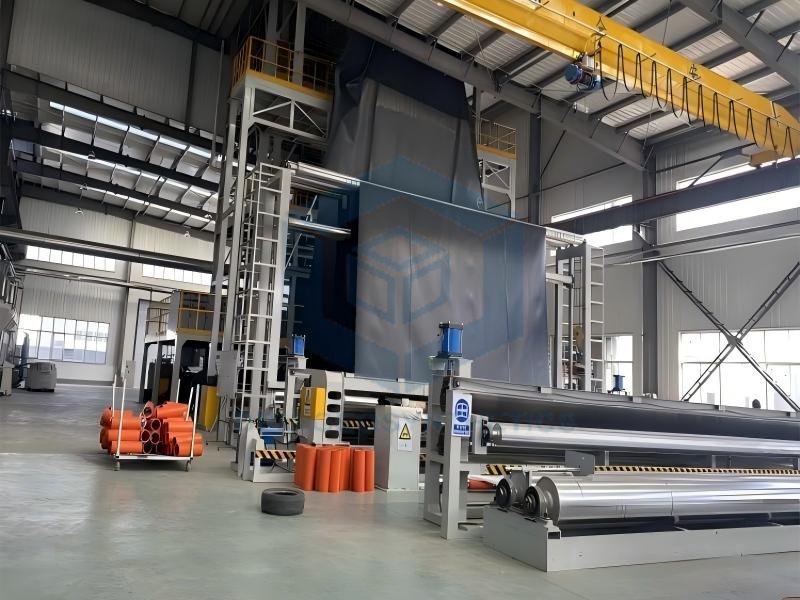
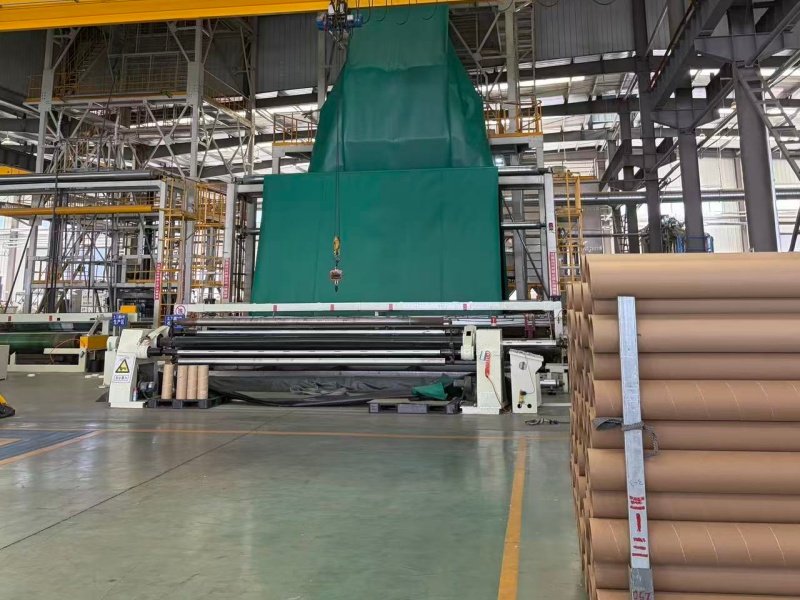
BPM Geosynthetics, associated with The Best Project Material Co., Ltd., is a supplier to consider when comparing geomembrane products for large containment projects. Buyers evaluating its LLDPE liner options should request the specific product data sheet, available thicknesses, roll dimensions, and quality-control documentation.
LLDPE’s flexibility makes it an attractive material for reservoirs with complex shapes or potential ground movement. For large projects, customized roll dimensions can also help project teams plan material quantities and field seams more efficiently.
Pros:
Suitable for evaluating customized liner specifications.
LLDPE offers flexibility for irregular reservoir surfaces.
Bulk procurement may help simplify project purchasing.
Can be assessed alongside geotextile protection and other geosynthetic materials.
Cons:
Exact LLDPE specifications and availability should be confirmed directly.
Performance depends on the selected formulation, thickness, and installation quality.
For buyers seeking a project-specific quotation, BPM is a useful supplier to contact. Review the company’s product portfolio and request documentation for the exact LLDPE product before specifying it.
2. Solmax GSE LL — Best for Established LLDPE Specifications
Best for: Large engineered reservoirs and projects requiring documented material properties.
Solmax GSE LL is a linear low-density polyethylene geomembrane designed to meet or exceed the requirements of the GRI-GM17 specification. The manufacturer highlights flexibility and ease of installation as key advantages for suitable containment applications. Official product page.
Its established technical documentation makes it a strong candidate for project teams comparing LLDPE geomembranes against defined engineering requirements.
Pros:
Manufacturer documentation references GRI-GM17.
Flexible material for suitable containment applications.
Available within an established geosynthetics product portfolio.
Cons:
Pricing and availability depend on location and project volume.
Buyers must verify the exact configuration and thickness for reservoir use.
Solmax GSE LL is worth evaluating when material documentation and specification compliance are major purchasing priorities.
3. Solmax GSE LLX — Best for Projects Requiring Enhanced Flexibility
Best for: Reservoirs where flexibility and multidirectional deformation are important design considerations.
GSE LLX is a high-performance LLDPE product line within Solmax’s geomembrane portfolio. It is intended for applications requiring enhanced flexibility and multiaxial performance compared with standard options. Buyers should confirm the current technical data sheet and intended application with the manufacturer. Solmax geomembrane range.
Pros:
Designed for applications where additional flexibility is important.
Can be considered for sites where differential movement is a concern.
Offers another performance level for project comparison.
Cons:
May not be necessary for every water reservoir.
The final specification should be selected by the project engineer.
For demanding sites, compare LLX against standard LLDPE using the actual design requirements rather than assuming a higher-performance product is always the most economical choice.
4. Layfield LLDPE Geomembrane — Best for Prefabrication Options
Best for: Reservoir projects seeking flexible liner materials and potential reductions in field seaming.
Layfield supplies LLDPE geomembranes designed for durability and flexibility. Its product information highlights prefabrication as an option that can reduce the number of field seams and improve quality control under suitable project conditions. The company lists smooth and textured products in specified thickness ranges. Official product information.
Pros:
Flexible liner options for containment applications.
Prefabrication may reduce field installation time.
Product documentation supports technical comparisons.
Cons:
Oversized prefabricated panels may require specialized transportation and lifting.
Availability depends on project location and dimensions.
For large reservoirs, ask whether prefabricated panels are practical given access roads, site geometry, and installation equipment.
5. Jinseed LLDPE Geomembrane — Best for Direct Factory Procurement
Best for: Buyers comparing customized thicknesses and roll sizes for export projects.
Jinseed Geosynthetics presents LLDPE geomembrane liners for ponds and containment applications, with published product information covering thickness options, roll widths, and mechanical properties. The supplier also states that its LLDPE liner production is tested against GRI-GM17 requirements. These claims should be confirmed through current technical documents for the product being quoted. Product details.
Pros:
Published information helps buyers prepare a technical inquiry.
Offers options for comparing thickness and roll dimensions.
Factory-direct procurement may suit bulk orders.
Cons:
Buyers should verify actual batch test reports and production capacity.
Freight, delivery schedule, and local technical support affect total project value.
Request a detailed quotation that specifies thickness tolerance, roll dimensions, testing methods, and shipment terms.
6. GSC Geosynthetics LLDPE Pond Liner — Best for Pond and Reservoir Applications
Best for: Buyers looking for a dedicated LLDPE pond-liner product.
GSC Geosynthetics offers an LLDPE pond liner described for waterproof containment in ponds, reservoirs, and liquid-storage systems. Its product information discusses extrusion manufacturing and quality checks for properties such as thickness and mechanical consistency. Official product page.
Pros:
Specifically presented for pond and reservoir lining.
Product information covers manufacturing and quality-control considerations.
Suitable for comparison during supplier selection.
Cons:
The exact specifications must match the project’s engineering requirements.
Buyers should request independently verifiable testing information where required.
This option is worth including in a competitive quotation process, particularly when evaluating product specifications and delivery terms.
7. Prefabricated LLDPE Reservoir Liner — Best for Reducing On-Site Seams
Best for: Projects where panel dimensions, site access, and factory fabrication make prefabrication practical.
A prefabricated LLDPE liner is not a single brand but a supply format worth considering. Panels can be fabricated in controlled factory conditions and delivered ready for deployment, depending on the project’s design and supplier capabilities.
Reducing field seams can simplify some installations, although the benefits depend on transportation constraints, panel size, site conditions, and the quality of field connections.
Pros:
Potentially reduces the amount of field welding.
Factory fabrication can support controlled production quality.
May shorten installation time on suitable sites.
Cons:
Large panels can be difficult to transport and position.
Field seams and connections still require appropriate inspection.
Custom fabrication may increase initial material and handling costs.
Ask suppliers to compare standard rolls with prefabricated panels based on total installed cost, not just the quoted liner price.
How to Select the Right LLDPE Liner for a Large Reservoir
GRI-GM17 is an important reference specification for smooth and textured LLDPE geomembranes. Buyers should request a technical data sheet showing the applicable specification and test methods. Relevant properties may include thickness, tensile behavior, elongation, tear resistance, puncture resistance, carbon black content, and oxidative resistance. The exact acceptance criteria depend on the specified product and project requirements. GRI-GM17 specification.
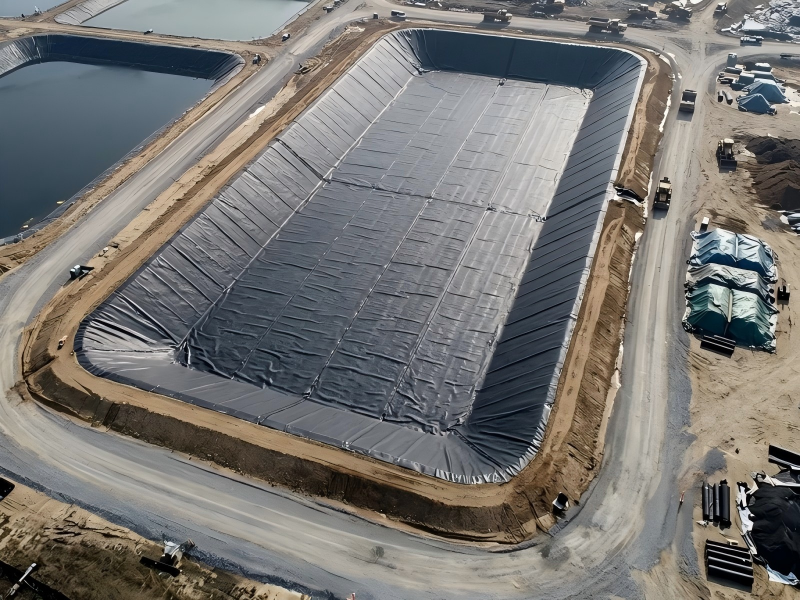
Thickness should be determined by engineering requirements rather than reservoir capacity alone. Subgrade preparation, protective geotextile, anchor trenches, slope design, water depth, and installation methods all affect the performance of the completed system.
For exposed reservoirs, confirm UV resistance and expected service conditions. For drinking-water storage, verify that the specific liner formulation and complete system meet the applicable potable-water requirements. Do not assume that every geomembrane is certified for drinking-water contact.
Finally, make sure installation includes qualified welding technicians, trial seams where appropriate, and a documented inspection and testing plan.