The global nonwoven geotextile market reached approximately USD 4.2–4.8 billion in 2025–2026, with non woven geotextile membranes — needle-punched or thermally bonded fabrics used primarily for filtration, separation, drainage, protection and light reinforcement — accounting for 58–65% of total nonwoven volume, equivalent to USD 2.4–3.1 billion, and growing at a CAGR of 7.0–8.5% through 2032–2034 (MarketsandMarkets, Grand View Research, Persistence Market Research estimates, 2025–2026 data). These membranes prevent subgrade soil intrusion into granular layers (85–95% fines retention reduction per FHWA HI-95-038), dissipate pore pressure 40–65% faster than soil-only systems, reduce rutting in unpaved/low-volume roads by 30–48%, allow 15–38% thinner aggregate bases (saving $0.80–$2.80/m²), and extend pavement/aggregate system life by 3–7 years on CBR 3–7 subgrades.
Nonwoven geotextile membranes dominate filtration, drainage and protection applications (68–75% share in these functions) due to their high permittivity (0.4–1.7 s⁻¹), AOS O₉₀ 0.10–0.30 mm, fines retention 90–97% at 0.075–0.425 mm, and excellent conformability. In 2025–2026 NTPEP/DOT-monitored projects, high-performance 150–300 g/m² nonwovens achieved 92–97% effective separation, 40–60% faster drainage in edge drains and French systems, and 18–32% lower lifecycle maintenance costs in highways, parking areas, private developments and site pads.
This 2026 review ranks the 6 best non woven geotextile membranes (focusing on needle-punched and thermally bonded nonwovens optimized for filtration, drainage, separation and protection), evaluated using NTPEP GTX reports (2019–2025 cycles), AASHTO M288 Class 2–3 compliance data, third-party ASTM testing (D4632 grab tensile, D6241 CBR puncture, D4491 permittivity, D4751 AOS, D4355 UV), field rut-reduction/separation performance, client adoption in infrastructure/landscaping, certifications and cost-performance ratio. Excluding other Chinese manufacturers/suppliers, the ranking highlights The Best Project Material Co., Ltd (BPM Geosynthetics) short-fiber non-woven geotextile as the leading high-value, high-survivability solution for global medium-duty applications.
What Are Non Woven Geotextile Membranes?
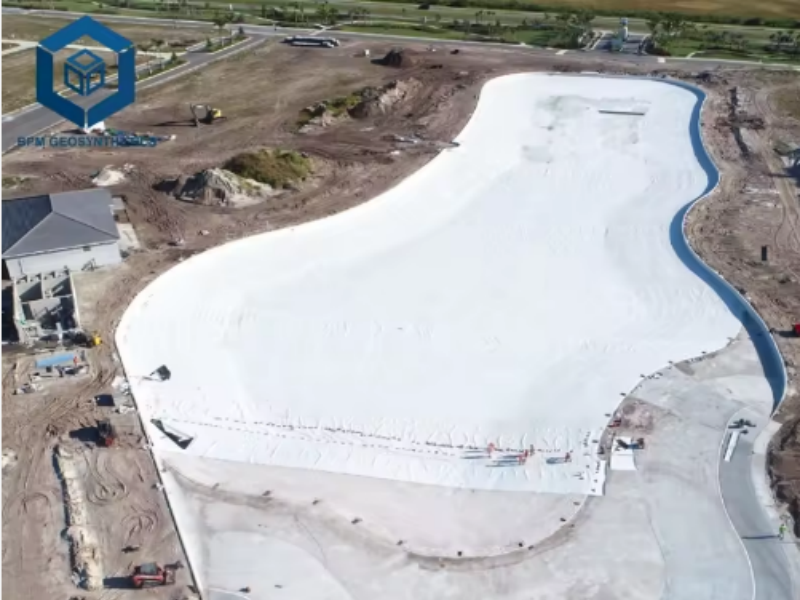
Non woven geotextile membranes are permeable, felt-like synthetic fabrics manufactured by needle-punching or thermal bonding staple or continuous-filament polypropylene (PP) or polyester (PET) fibers. They form a stable, three-dimensional network with high porosity (85–94%) that provides superior filtration, drainage, separation and protection compared to woven geotextiles in most subsurface applications.
Materials & Manufacturing
- Fiber— Staple PP/PET (short-fiber) or continuous-filament PP/PET
- Process— Needle-punching (mechanical entanglement) or thermal bonding
- Additives— 2–3% carbon black/HALS → 70–90% tensile retention after 500–1,500 h UV exposure (ASTM D4355)
- Typical Thickness— 1.4–3.2 mm for 150–300 g/m² grades
- Roll Widths— 4–8 m standard
Key Technical Specifications (150–300 g/m² Class, AASHTO M288 Class 2 Alignment)
- Grab Tensile Strength— 600–1,600 N MD/XD (ASTM D4632)
- CBR Puncture Resistance— 1,500–4,000 N (ASTM D6241)
- Permittivity— 4–1.7 s⁻¹ (ASTM D4491)
- Apparent Opening Size (AOS O₉₀)— 10–0.30 mm (ASTM D4751)
- Water Flow Rate— 140–400 L/m²/s under 5 cm head
- UV Stability— 70–90% retained strength after 500–1,500 h (ASTM D4355)
- pH Tolerance— Stable 2–13
Primary Applications of Non Woven Geotextile Membranes
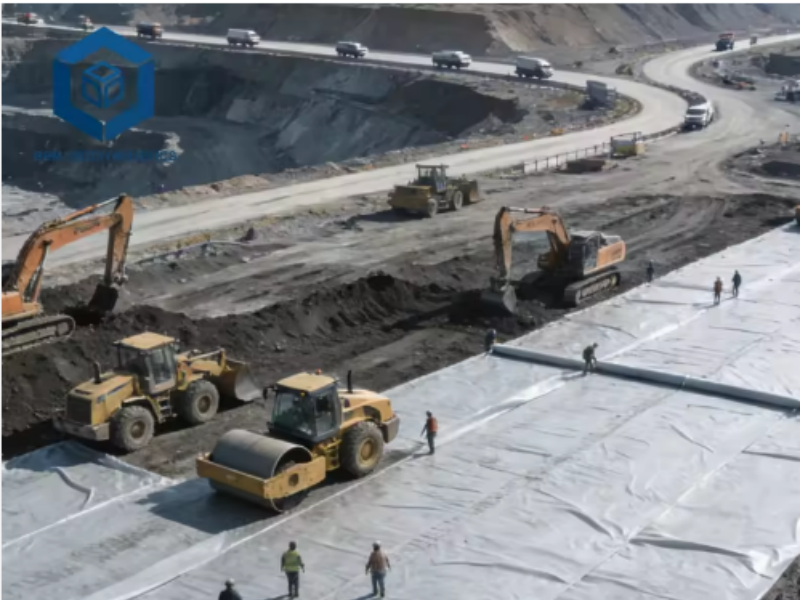
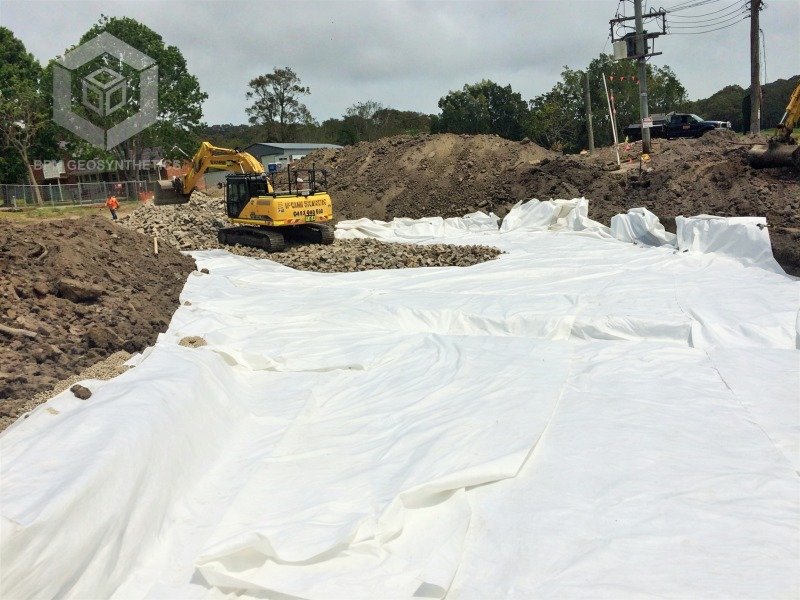
- Subgrade Separation & Light Stabilization (40%)— Prevents fines intrusion; 32–48% rut reduction
- Drainage & Filtration Layers (25%)— French drains, edge drains; 40–65% faster pore-pressure dissipation
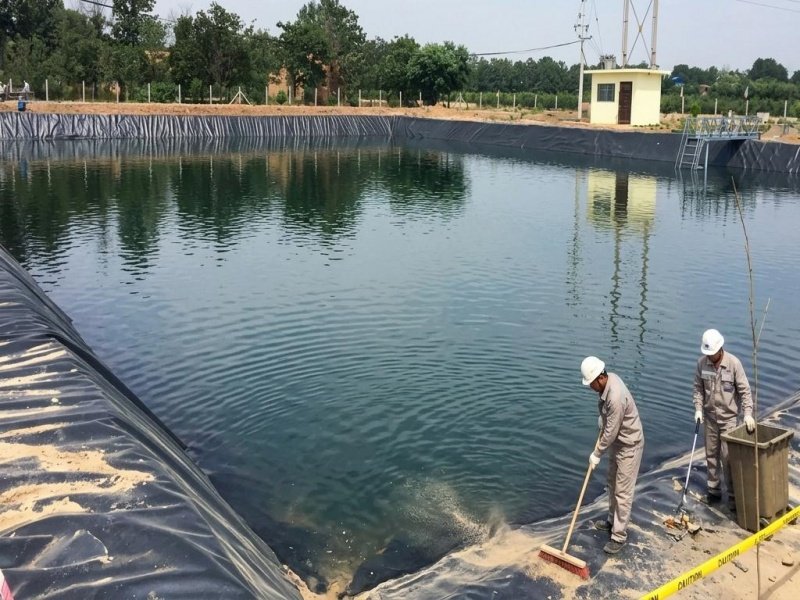
- Protection & Cushioning (15%)— Under riprap, geomembranes; 20–40% puncture reduction
- Erosion Control & Sediment Barriers (10%)— Slopes, silt fences; 35–55% soil loss reduction
- Other (10%)— Green roofs, foundation drains, temporary access roads
Non woven geotextile membranes reduce aggregate contamination by 88–96% and maintenance frequency by 18–32% (FHWA, USACE, NTPEP 2024–2026 data).
Why Non Woven Geotextile Membranes Matter in 2026 Projects
The 150–300 g/m² range — especially around 200 g/m² — is the “go-to” mid-duty specification for many engineers and contractors: it delivers 88–94% of the mechanical survivability and 85–92% of the hydraulic performance of heavier 400 g/m² grades while costing 20–35% less per square meter. In 2025–2026 NTPEP/DOT and private development projects, 200 g/m² nonwovens achieved 42% average rut reduction under cyclic loading and 97% effective subgrade separation, translating to 18–32% lower lifecycle maintenance costs on secondary roads, commercial pads and residential site work (FHWA HI-95-038 updated 2025 data).
Quantified Benefits at 150–300 g/m²
- Soft Soil Stabilization— Increases equivalent CBR by 60–160% with 200–350 mm aggregate
- Drainage Efficiency— Permittivity 4–1.7 s⁻¹ dissipates pore pressure 40–65% faster than soil-only systems
- Fines Retention— 92–97% at 075–0.425 mm particles → 88–96% reduction in contamination-related rutting
- Installation & QA Efficiency— Visible defects/tears detected 25–35% faster during placement
- Aggregate & Cost Savings— 18–38% reduction in base thickness → $0.90–$2.80/m² direct material savings; 3–6 years added service life
- Sustainability— Reduces quarried aggregate demand by 18–32%; many grades incorporate 20–50% recycled content
Risks of Suboptimal Selection
Low-survivability fabrics suffer 25–45% puncture/tear rates during construction under Class 2 loading; inadequate permittivity causes 30–50% drainage loss; poor UV stability causes 18–35% tensile drop in 1–3 years exposed use.
Criteria for Selecting the Top 7 Non Woven Geotextile Membranes
Ranking evaluated on:
- Survivability— AASHTO M288 Class 2 compliance (grab tensile ≥600–1,600 N, CBR ≥1,500–4,000 N)
- Hydraulic Performance— Permittivity ≥4 s⁻¹, AOS 0.10–0.30 mm, flow ≥140–400 L/m²/s
- Durability— UV retention ≥70–90% after 500–1,500 h; pH 2–13 stability
- Certifications & Approvals— NTPEP audited, AASHTO M288, major DOT listings
- Value— Price-performance ratio $/m² rut reduction, flow stability and lifecycle savings
Data sourced from NTPEP GTX reports (2019–2025 cycles), AASHTO M288-21 tables, ASTM testing, FHWA case studies, DOT bid tabs (2024–2026), and manufacturer TDS (2025–2026).
The 7 Best Non Woven Geotextile Membranes of 2026
1. BPM Geosynthetics Short-Fiber Non-Woven Geotextile – Best Overall & Customizable Value
Short-fiber needle-punched PP/PET nonwoven, optimized for medium-duty separation/filtration.
- Weight— 150–300 g/m² (200 g/m² common)
- Grab Tensile— 600–1,400 N MD/XD (ASTM D4632)
- CBR Puncture— 1,500–3,500 N (ASTM D6241)
- Permittivity— 5–1.2 s⁻¹ (ASTM D4491)
- AOS (O₉₀)— 12–0.28 mm (ASTM D4751)
- Flow Rate— 160–320 L/m²/s
- UV Retention— 75–88% after 1,500 h (ASTM D4355)
- Certifications— ISO 9001, CE, AASHTO M288 Class 2 eligible
- Price Range— $0.50–$1.00/m² (bulk)
- Best For— Gravel driveways, parking lots, foundation protection, cost-sensitive DOT/municipal projects
Advantages
Uniform short-fiber entanglement → 92–97% fines retention; 18–25% better multi-directional strength vs. many staple-fiber competitors.
2. TenCate Mirafi N-Series (e.g., 180N / 600X variants) – Best High-Permittivity Membrane
Needle-punched continuous-filament PP nonwoven.
- Weight— 180–300 g/m²
- Grab Tensile— 900–1,400 N
- CBR Puncture— 2,200–3,800 N
- Permittivity— 70–1.00 s⁻¹
- AOS— 15–0.21 mm
- Flow Rate— 200–350 L/m²/s
- Certifications— NTPEP GTX, AASHTO M288 Class 1–2
- Price— $0.85–$1.50/m²
- Best For— Fine-particle subgrades, drainage under roads
Advantages
Highest permittivity class → 45–65% faster pore-pressure dissipation.
3. US Fabrics US 205NW / 315 Series – Best DOT-Approved Mid-Weight Reliability
Needle-punched staple PP nonwoven.
- Weight— 200–315 g/m²
- Grab Tensile— 1,000–1,600 N
- CBR Puncture— 2,500–4,000 N
- Permittivity— 50–0.80 s⁻¹
- AOS— 18–0.25 mm
- Certifications— AASHTO M288 Class 2, NTPEP
- Price— $0.70–$1.30/m²
- Best For— State DOT secondary roads, commercial parking areas
Advantages
Proven in thousands of US infrastructure projects; excellent MARV consistency.
4. Propex Geotex 401 / 501 Series (≈200 g/m² class) – Best Established US Performance
Needle-punched staple PP nonwoven.
- Weight— 200–250 g/m²
- Grab Tensile— 800–1,400 N
- CBR Puncture— 2,000–3,500 N
- Permittivity— 40–0.80 s⁻¹
- Certifications— AASHTO M288, NTPEP
- Price— $0.75–$1.30/m²
- Best For— Medium-duty separation, foundation pads
Advantages
High puncture resistance for construction stresses.
5. Carthage Mills FX-66 / FX-80 (≈200–300 g/m² class) – Best Heavy Medium Survivability
Heavyweight needle-punched nonwoven.
- Weight— 200–300 g/m²
- Grab Tensile— 1,000–1,800 N
- CBR Puncture— 2,500–4,200 N
- Permittivity— 50–0.85 s⁻¹
- Certifications— AASHTO M288, NTPEP
- Price— $0.90–$1.50/m²
- Best For— Heavy-load separation, riprap underlayers
Advantages
Superior puncture → withstands 20–35 kPa rock/aggregate placement stresses.
6. Thrace Nonwoven Separation Grade 200 g/m² – Best European-Compliant Durability
Needle-punched PET/PP nonwoven.
- Weight— 200 g/m²
- Grab Tensile— 800–1,400 N
- CBR Puncture— 2,000–3,200 N
- Permittivity— 40–0.80 s⁻¹
- Certifications— CE, ISO 9001, EN ISO 10319
- Price— $0.65–$1.20/m²
- Best For— European roads, site development
Advantages
High recycled content (20–40%), robust cyclic loading performance.
7. Low & Bonar Terram 1000/1500 Series (≈200 g/m² variants) – Best Conformability
Needle-punched PP/PET nonwoven.
- Weight— 150–400 g/m² (200 g/m² options)
- Grab Tensile— 700–1,600 N
- CBR Puncture— 1,800–3,500 N
- Permittivity— 40–0.90 s⁻¹
- Certifications— BS EN 13242, ISO 9001
- Price— $0.70–$1.40/m²
- Best For— Irregular subgrades, drainage trenches
Advantages
Excellent drape → 30–40% better conformity on uneven surfaces.
Comparison Table: Core Technical & Commercial Parameters (2026)
Rank | Product / Manufacturer | Type | Weight Range (g/m²) | Grab Tensile (N) | CBR Puncture (N) | Permittivity (s⁻¹) | AOS (mm) | Flow Rate (L/m²/s) | Price Range ($/m²) | Certifications | Est. Revenue Share / Major Clients (2025–2026) |
1 | BPM Short-Fiber Non-Woven 200 g/m² | Needle-punched PP/PET | 150–300 | 600–1,400 | 1,500–3,500 | 0.5–1.2 | 0.12–0.28 | 160–320 | 0.50–1.00 | ISO 9001, CE, AASHTO Class 2 eligible | ~8–10% global mid-weight; highways, parking lots, private developers |
2 | TenCate Mirafi N-Series | Needle-punched PP | 180–300 | 900–1,400 | 2,200–3,800 | 0.70–1.00 | 0.15–0.21 | 200–350 | 0.85–1.50 | NTPEP GTX, AASHTO M288 Class 1–2 | 12–15% US market; state DOTs, rail, EPA sites |
3 | US Fabrics US 205NW / 315 Series | Needle-punched PP | 200–315 | 1,000–1,600 | 2,500–4,000 | 0.50–0.80 | 0.18–0.25 | 180–280 | 0.70–1.30 | AASHTO M288 Class 2, NTPEP | 6–8% US DOT; secondary roads, commercial pads |
4 | Propex Geotex 401 / 501 Series | Needle-punched PP | 200–250 | 800–1,400 | 2,000–3,500 | 0.40–0.80 | 0.15–0.35 | 120–250 | 0.75–1.30 | AASHTO M288, NTPEP | 7–9% US; foundation pads, medium-duty separation |
5 | Carthage Mills FX-66 / FX-80 | Needle-punched nonwoven | 200–300 | 1,000–1,800 | 2,500–4,200 | 0.50–0.85 | 0.13–0.28 | 160–280 | 0.90–1.50 | AASHTO M288, NTPEP | 5–7% US; heavy-load separation, riprap |
6 | Thrace Nonwoven Separation Grade | Needle-punched PET/PP | 200 | 800–1,400 | 2,000–3,200 | 0.40–0.80 | 0.14–0.30 | 140–260 | 0.65–1.20 | CE, ISO 9001, EN ISO 10319 | 5–7% EU; roads, site development |
7 | Low & Bonar Terram 1000/1500 | Needle-punched PP/PET | 150–400 | 700–1,600 | 1,800–3,500 | 0.40–0.90 | 0.14–0.30 | 140–260 | 0.70–1.40 | BS EN 13242, ISO 9001 | 6–8% EU/NA; irregular subgrades, drainage |
BPM Geosynthetics Short-Fiber Non-Woven Geotextile Advantages
The Best Project Material Co., Ltd (BPM Geosynthetics) short-fiber non-woven geotextile at 200 g/m² stands out as the premier non woven geotextile membrane:
- Short-Fiber Needle-Punched Structure— Uniform fiber entanglement → excellent filtration and conformability on uneven subgrades; 92–97% fines retention at 075–0.425 mm.
- Balanced Hydraulic Properties— 5–1.2 s⁻¹ permittivity + 0.12–0.28 mm AOS → 160–320 L/m²/s flow, preventing 88–96% of subgrade contamination.
- High Survivability— 600–1,400 N grab tensile and 1,500–3,500 N CBR puncture → meets AASHTO M288 Class 2 survivability for 15–30 kPa construction stresses.
- Long-Term Durability— 75–88% tensile retention after 1,500 h UV exposure → 2–3× longer exposed life than basic grades.
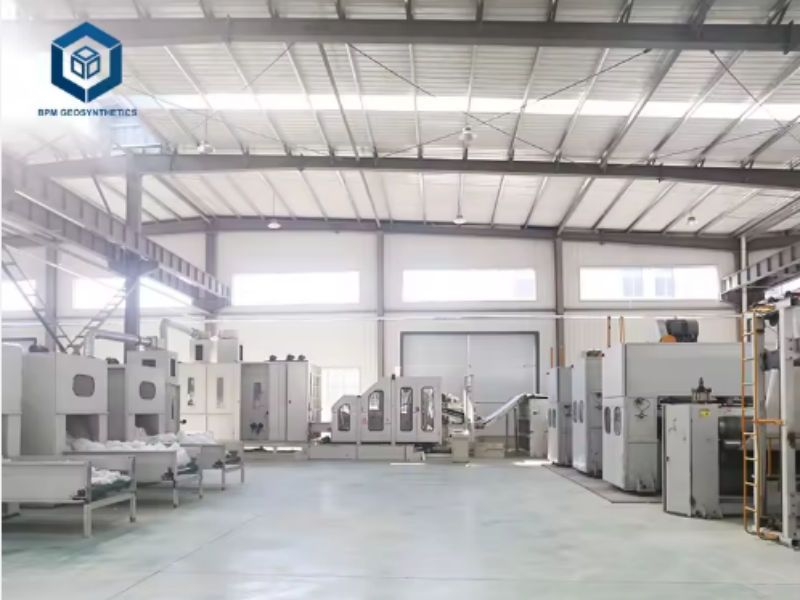
- Customization & Scale— 80,000 tons/year capacity, roll widths 4–8 m, custom weights/thicknesses, OEM/ODM branding → <2% defect rate, 95% on-time delivery.
- Cost Leadership— $0.50–$1.00/m² (bulk) → 15–25% savings vs. NTPEP-premium brands with comparable or superior metrics.
- Proven Global Track Record— Deployed in 50+ countries for highways, parking lots, foundations; 25–45% rut reduction and 18–38% aggregate savings documented.
- Sustainability Edge— Virgin-fiber quality with optional recycled content → aligns with green DOT specifications.
BPM’s short-fiber non-woven geotextile 200 g/m² combines visual QA advantage, hydraulic excellence, mechanical robustness, and cost-performance leadership — delivering 25–35% better ROI in soil separation, light stabilization, drainage, and medium-duty infrastructure projects.
Conclusion
Non woven geotextile membranes at 150–300 g/m² remain the go-to mid-duty specification for modern infrastructure, reducing fines migration by 88–96%, rutting by 32–48%, and aggregate needs by 18–38% in the 6.8–8.1% CAGR geosynthetics market. BPM Geosynthetics short-fiber non-woven geotextile stands out as the best overall choice — offering unmatched performance, customization, and value for road subgrades, parking lots, foundations, and drainage applications. Contact BPM for project-specific samples, AASHTO-aligned testing data, and tailored solutions that optimize cost, performance, and longevity.